

By Hymie Rubenstein ——Bio and Archives--March 21, 2025
Canadian News, Opinion | CFP Comments | Subscribe | Email Us
Perhaps the greatest flaw of the six-volume 2015 Final Report of the Truth and Reconciliation Commission of Canada was its almost totally decontextualized focus on indigenous grievances. In the few instances where there was a comparison in time or place to similar non-indigenous issues, the Commission always cherry-picked examples where the experiences of aboriginal children were worse than their non-indigenous counterparts.

In contextualizing the death rates of indigenous children who were registered as attending an Indian Residential School, for example,the highly questionable comparison was to the general Canadian population of school-aged children, using five-year averages from 1921 to 1965. Had the comparison been to the one-third of indigenous students who attended no school during the period these death rates were much higher it would have been found that aboriginal children entered their residential schools already infected with a deadly contagious disease like tuberculosis.
Similarly, the Report contained no detailed examination of the very high mortality rates among young indigenous people during the pre-European contact era and the 250 years following close contact with Europeans.
Perhaps the Report’s most egregious shortcoming is its failure to compare the treatment of indigenous people, including youngsters, in Canada with their treatment elsewhere in the world during the colonial era.
If its researchers had done so they would have found that Canada’s treatment of the country’s first human inhabitants was comparatively exemplary.
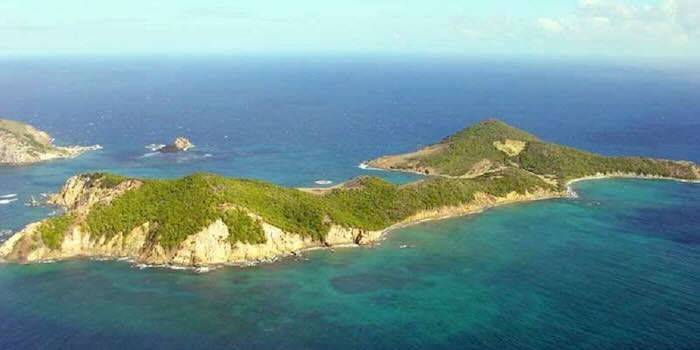
At least that is my take on the recent decision of the Eastern Caribbean government of St. Vincent and the Grenadines (SVG) to acquire Balliceaux, the desolate and uninhabited 320-acre Grenadine island where more than 5,000 Garifuna and Kalinago indigenous people were rounded up like cattle and forcibly taken following the killing of their Paramount Chief Joseph Chatoyer and their subsequent military defeat in the Second Carib War (1795-1797).
Due to starvation, disease, and sickness from exposure to the elements on that uninhabited island, more than half of the Garifuna people died in concentration camps on Balliceaux. The rest were deported to the then equally desolate island of Roatan off the coast of present-day Honduras, in a process deserving the name “ethnic cleansing.” Their descendants live today as the Garifuna people in Honduras, Belize, Guatemala, Nicaragua, and the United States.
As a sovereign country, SVG is morally and legally obliged to accept and atone for sins like these committed by their colonial forefathers.
Alas, its leaders and their followers continue to refuse to make amends for either this ethnic cleansing of most of the country’s indigenous inhabitants – a massive expulsion that never occurred in Canada – or the importation and enslavement of thousands of Black Africans during the nation’s long slavery era. Instead, they, along with most of its people – high and low, rich and poor, Black, Brown, and White – continue to place moral blame and economic responsibility for all the historical wrongs of their ancestors, regardless of whether they were legal or ethical during the time they were committed, on Great Britain the nation it eagerly severed its colonial ties with in 1979.
Compare this to two of SVG’s northern neighbours – America and Canada – both of which also experienced the conquest and dispossession of their indigenous peoples, along with a long and numerically large period of slavery – at least in America – also during the era preceding independence from Great Britain.
In both these now independent state societies there have been demands by many individuals and groups at both the official government and informal grassroots levels for apologies and reparations for the expropriation of land from the original indigenous people and for the enslavement of millions of mainly West African people sold into perpetual bondage upon their forced arrival to the New World.
But none of the demands for monetary restitution in both Canada and America have been made against Great Britain, the motherland across the sea.
This is because both countries are advanced nations composed of mature people whose leaders fully accept that they have inherited responsibility for the horrors committed by their founding ancestors upon their achievement of political independence, in America via revolution and in Canada through peaceful negotiation.
By comparison, the leaders of SVG and most other independent Caribbean nation-states have demonstrated a profound lack the wisdom, courage, and integrity needed to acknowledge any responsibility for their historical sins and other transgressions, in the process acting as if they are still a backward British colonial possession with no responsibility whatsoever for the sins of the past.
All this is clear from the recent history of dealing with their now entirely mixed-race and fully assimilated Garifuna people, still locally called the Caribs of SVG.
The graves and remains of those who died on Baliceaux have never been officially marked or excavated. Today, the island is essentially a graveyard. Due to this sensitive history and the obvious physical challenges such as the absence of beaches or a suitable harbour, the development of the island is unlikely to ever happen.
The privately-owned island was offered for sale in 2023, with an asking price of US$30 million. Prime Minister Ralph Gonsalves announced in parliament on March 6 that the government had acquired Baliceaux due to its “historical and cultural significance to the Garifuna people.” He stated that the former owners would be given “fair compensation within a reasonable time,” though US$30 million, the advertised asking price, seems outrageous for a rock of no commercial value or potential.
Meanwhile, Dr. Gonsalves has not said a word about the role in all of this of the overseas brothers and sisters of the local Garifuna people, namely the pure and mixed-race people called the Kalinago (or Garinagu) living in Central America and elsewhere.
This is because the Prime Minister literally disqualified them from any Vincentian recognition in 2015 during a visit to his country of a Garifuna delegation headed by Dr. Wellington Ramos, Vice President of the United Garifuna Association, to discuss the promise made by the then leader of the New Democratic Party opposition, Arnhim Eustace, to grant “honorary citizenship” to its exiled founding people should his party gain power in the next election.
Speaking at a press conference on June 2, 2015, Dr. Gonsalves employed fear mongering in his reply to Eustance’s proposal when he said:
“I do not support that [citizenship]. I do not support that …. When you give them honorary citizenship, our Garifuna brothers and sisters, are they coming out from Belize, from Nicaragua, from Honduras from Guatemala, they are coming out of those countries for jobs in St. Vincent? …. They are coming for your houses? … But what are they going to have? Just a piece of people saying, ‘I declare you to be an honorary citizen?’ You giving them a passport? Because for sure, you have more Garifunas who are not Vincentians outside than the people of St. Vincent and the Grenadines as a whole…. Do they want to give honorary citizens the right to vote now? You going give Garifuna the right to vote, but Vincentians who overseas don’t have the right to vote? You going put Garifunas above them who ain’t born in St. Vincent and who are not descended directly?” said Gonsalves, who estimates the Garifuna population to be 800,000.”
Eustace calmly replied that some elements of the proposal still had to be fleshed out, but claimed his proposal would not grant overseas Garifunas the right to live and work in SVG or to acquire a Vincentian passport.
Both men seemed to forget that on September 13, 2007, Dr. Gonsalves’ Unity Labour Party government voted to adopt the United Nations Declaration on the Rights of Indigenous People (UNDRIP), a document also accepted by the Canadian government. While the UNDRIP is not a legally binding instrument under international law, it does hold considerable moral standing as “… a significant tool towards eliminating human rights violations against the planet’s 370 million indigenous people and assisting them in combating discrimination and marginalization.”
Like Canada, by accepting the UNDRIP, SVG was acting as a sovereign nation taking independent responsibility for the welfare, aspirations, and injustices committed against its indigenous people: the Garifuna at home and the forcibly exiled Garinagu abroad.
This responsibility to both cohorts of our aboriginal people is clearly spelled out in Articles 27 and 28:
Article 27.
Article 28.
When the 5,080 Garifuna were forcibly transferred to Roatan, their lands, some 11,000 acres that were “granted” in a treaty they were forced by the British to sign in 1769 and which saw the loss of over 20,000 acres of their indigenous territory to British sugar planters, was taken from them. The few Garifuna allowed to remain behind in SVG were given 233 acres of land upon which they were prohibited from growing sugarcane.
None of that land remains as a collectively owned reserve.
Unlike his current Canadian counterparts, not to mention those going back to the colonial era, politicians like Ralph Gonsalves, have washed their hands of any responsibility for the “ethnic cleansing” of his country’s aboriginal population – even after signing the UNDRIP – by claiming in his many slavery and genocide reparation requests that since the British government was in charge when this took place over 200 years ago, his country must look to them for any restitution or compensation.
This stance has neither morality nor the law on its side.
In short, after he struggled so hard for independence, the Prime Minister is now proclaiming to the world that his people are masters in their own house in name only.
The same argument could have been made for similar wrongs committed against their aboriginal peoples by the United States, Canada, Australia, and New Zealand, just to name some other British colonial possessions, before they became independent nation-states. Each of these sovereign countries has rightly taken sole responsibility long ago for the historical treatment of their indigenous peoples.
After all, if land must be returned to the aboriginal people, it can only be returned by these now sovereign nations which alone have the legal constitutional right to grant (if publicly owned) or expropriate (if privately held) property to do so.
The Prime Minister of SVG’s 2015 blunt refusal to entertain the benign and symbolic notion of honorary citizenship for the Garinagu, if only as partial restitution for the heinous acts committed against them, is a repudiation of the spirit and intent of the UNDRIP which SVG gladly accepted in 2007.
The harsh tone of his refusal to consider honourary citizenship for the descendants of the exiled Kalinago and his use of ethnic fear-mongering about the loss of jobs and homes to hordes of people invading from foreign lands is also an insult to the many indigenous peoples around the world who have been subjected to the same unspeakable treatment as his founding people and their exiled relatives.
His refusal to even mention the possible return of Balliceaux to its rightful owners is equally repugnant.
Instead, in its latest comment on the Balliceaux acquisition, Gonsalves’ Unity Labour Party has argued, “Our persistent calls for reparatory justice for the genocide committed against our indigenous people are anchored in the colonial killing of almost 2,500 Garifuna people on Balliceaux.”
“Reparatory justice” – financial and/or territorial reparations – from whom, if not from the so-called sovereign nation of SVG? And why is this island being claimed by a country, SVG, heir to all the British atrocities, but still wallowing in a servile colonial mentality, rather than given as a grant to the Garifuna themselves to memorialize as they see fit, the funds to do so coming from the central government, as is the norm in the other former colonies – especially Canada – mentioned above?
What all this shows is that Dr. Gonsalves’ treatment of the Garifuna/Kalinago/Garinago people, including on March 14, a public holiday called National Heroes' Day, honouring the anniversary of the death Chief Joseph Chatoyer in 1795, and the current expropriation of Balliceaux, are examples of hypocritical and gratuitous virtue signalling, nothing more, nothing less.
While some readers may still wonder what the case of SVG’s past and present treatment of its indigenous people has to do with reconciliation with the aboriginal peoples of Canada, my answer is that the SVG example, and thousands like it around the world since time immemorial, clearly illustrate that the treatment of our country’s first human inhabitants in both the past and present has ranged from positively benign to genuinely altruistic.
Alas, the comparatively benevolent treatment of our indigenous peoples from first contact to today is an observation never made by indigenous activists and their elected federal government supporters.
View Comments
Hymie Rubenstein, a retired professor of anthropology at the University of Manitoba, is editor of —REAL Indigenous Report.