

By Ray d'Entremont ——Bio and Archives--July 28, 2026
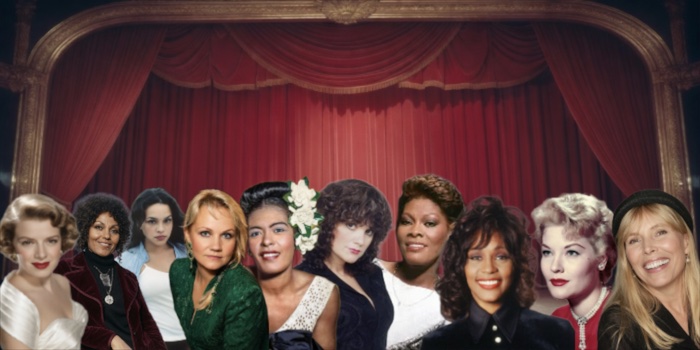
Artists from left to right: Rosemary Clooney, Cleo Laine, Norah Jones, Eva Cassidy, Billie Holiday, Linda Ronstadt, Dionne Warwick, Whitney Houston, Patti Page, Joni Mitchell
1. Over The Rainbow--Eva Cassidy:
Eva was unrecognised in the USA. After she died of cancer in her 30s, a producer at BBC Radio 2 found her CD, played it, and the phones lit up. Discovered posthumously! My wife and I were driving home one night when this came on the radio. When she hit the high note, I hit the brakes to catch the artist’s name. We bought the CD the very next day. Pure, emotive--what tragedy to lose this sweet soul so soon!

I think we’ve broached the subject of baffling coincidence before. In Grade 1-2, my best buddy was Laurie Dakin. Inseparable baseball nuts, we swung bats, worshipped Mickey Mantle and memorized every stat on hundreds of baseball cards. His dad joined the army. Gone! In the 1970s, I attended a school reunion in Ontario with my new bride, the “former” Miss Valentine. She was an army brat whose daddy’s last posting was Camp Petawawa. There, I met the guy she competed with for top marks in junior high. Laurie Dakin! Equally odd, as kids Heather and I both sang, and both often misheard unfamiliar words. In this Patti Page classic we both belted out, “leave your pickle packs behind you!”
The purest voice ever, Norah comes by her musicality naturally. Daddy was Ravi Shankar, virtuoso sitarist & composer--the world’s foremost exponent of Hindustani classical music. There are a lot of Indians, eh! It was Shankar who taught Beatle George Harrison to play sitar, but more impressively, he was a big part of the film score for the movie Gandhi. As if destined for stardom, Norah’s concert-promoter mother reared her in Texas after the divorce. She recognized and cultivated her daughter’s genetic gift. Norah’s first album showcased a sultry, velvety voice and effortless delivery. It sold 27 million copies and swept the Grammys.
After the Byrds broke up, David Crosby and members of his new band--not yet Crosby, Stills & Nash--stood at the door of a Miami club and heard Joni. They looked at each other and said, “Ah, so that’s how it’s done.” Not bad for a chick from Saskatchewan, eh! Sipping from the same chalice as Dylan, Lightfoot and Paul Simon, Joni’s nectar has aged the best of them all. Her songs are extremely hard to reproduce live, even for her, because she often tuned her guitar to whatever harmony she heard wafting through the ether as she composed. She used suspended chords extensively, which she called “chords of inquiry” because they create drama as they insist on resolution. If I hadn’t been totally sold by Both Sides Now this song would have done it. Who else could slip “unfettered” into a pop lyric? And check out that brilliant lingering image as she shares her reluctance to return to the duty she has committed to, “Stoking the star maker machinery behind the popular song.”

Marie Dionne Warrick of East Orange, New Jersey, changed her surname to “Warwick” after a misspelling on her first hit. If there’s a better musical equation than Bacharach/David/Warwick, God kept it in Heaven. Burt’s sophistication + Hal’s poignancy + Dionne’s interpretive genius = masterpiece! Like the Beatles, they were greater than the sum of their parts. La Vie En Rose was captured live during a triumphant five-week residency at Paris’ Olympia Theatre, where she shared the bill with heartthrob Sacha Distel. Édith Piaf’s French classic gains cross-cultural glow through Dionne’s sensibility. The strings sustain a final, ominous chord--an E7sus4? --presaging the moment when the rose-coloured glasses slip off. After decades of hits & Grammys, her net worth sits around a modest $300,000. Whitney Houston’s beloved Auntie was still performing when, in 2013, bankruptcy filings revealed $10 million in debts. Sheesh!
At about 15, after a stint in prison on a prostitution charge, Billie auditioned as a dancer at a speakeasy nightclub. She wasn't a good dancer. As the manager was about to send her away, the pianist asked whether she could sing instead. She did, wowed the room--people cried and threw money--and was hired on the spot. A couple of years later, producer John Hammond discovered her, which led to her first recordings in 1933 with Benny Goodman. The music to this classic was co-written by Billie and Arthur Herzog Jr., but the lyrics were all Billie’s following a fight with her mother. According to Billie’s autobiography, Lady Sings the Blues, her mother had benefited from Billie’s earnings earlier in her career, but refused help when Billie asked her for money. The song is about feelings of abandonment and a wish for self-reliance. I’d assumed her mother was turning her down because of drugs, but according to Billie, the song was written in 1939, before her heroin use began. Of course her mother may have known or suspected something. Life itself was harsh for Billie: she faced exploitation, racism, and instability throughout her career. I once heard Sinatra say that he used to leave Hoboken across the Hudson to New York and learned how to emote by watching her.
Rosemary didn’t care for the novelty songs Columbia Records foisted upon her during her early years--songs such as “Come On-a My House” and “Botch-a-Me (Ba-Ba-Baciami Piccina).” George Clooney’s aunt was one of the great songstresses of her era. He once worked as her chauffeur--and drove Tony Bennett ,too--and in the process learned a great deal about the ephemeral nature of fortune: that success is only partially due to talent; how fame is fleeting; that public taste shifts with time and novelty; how luck and fate are two sides of a flipped coin; and that stardom may depend as much upon catching a wave as upon intrinsic worth. George has remarked that he is grateful he didn’t achieve success until in his thirties. Rosemary had become a national star at an early age, but that light was all but extinguished with the rise of rock ’n’ roll. With great fortitude, she reinvented herself and climbed back up the success ladder. At two one morning, I was driving home when I had to pull over to learn whose voice I was hearing on the radio. I’d assumed she was African American--most of my favourite female jazz singers are--but it was the new and improved Rosemary, now a master of the jazz standard. George once quipped that Rosemary had made all the mistakes. He said this with great affection: her experience meant he didn’t have to make those same mistakes himself.
Co-writers Roy Orbison & Joe Melson tapped into a deep lode of longing, vivid imagery & barbless melodic hooks. It’s deceptively hard to play music at such a glacial tempo without dragging, but Linda and her band deliver a masterclass, sketching a simpler world, a slower pace, and a sleepy bayou where hungry, whiskered mudcats are just too lazy to bite.
Stephen Sondheim penned this subtle masterpiece 50 years ago for musical theatre. Cleo gets that it needs to breathe, but remain intimately in your face and conversational for its tragicomic effect, not belted to the rafters. Like a female counterpart to “Yesterday When I Was Young,” the gentle harp intro and 3/4 time signature seem vulnerable, a waltz of sighs and regrets. With a four octave range, Cleo has access to the smoky warmth of a contralto and the shimmering highs of a soprano. Add perfect pitch, flawless diction and the improvisational chops of an Ella or Sassy, and it’s given: Cleo Laine could sing the telephone book!
Dolly Parton wrote this song when she left Porter Wagoner to pursue a solo career. Using it in The Bodyguard was Kevin Costner’s idea; he played Linda Ronstadt’s version for Whitney. Whitney was a quick study who often nailed vocals in one take. Her extraordinary talent and precision must have impressed her producers, engineers and collaborators, and producer David Foster was reportedly so awed during the a cappella opening, he cried. Her first-take vocal resulted in a hit that stayed on the Billboard Hot 100 for 14 weeks, a Grammy for Record of the Year, and one of the best selling singles of all time.
View Comments
A boy soprano, lifelong music lover, and serial starter of things, Ray has worn more hats than most people have ever owned. Music has been a constant companion.
His playlists are an eclectic mix of genres accessed by mood and time. Over the years, he variously played in mostly rock and electric blues bands, but jazz and country too, in the Runic Stones, X-Men of Note, Purple Splintered Night, Broken Vessel, Country Gold, Eddy & The Hubcaps, ORCA, Hardscratch Road 2.0, and several others. His wife of 57 years (high school sweetheart) doesn’t agree that he needs 25 guitars!