With a car interest and a brother who was an auto mechanic, I began to look for old cars behind barns or abandoned in neglected fields. I found a 1950 Plymouth wagon in a barn in Ohio. There was my first old car boneyard where I saw old Dodge Brothers sedans and a Chevrolet sedan with a bowtie on the little hubcaps on the wood spoke wheels. At a scrap yard I drove past on the way home from school, two Model T Ford coupes from about 1924 appeared one day, pulled out of a barn somewhere. I asked, but couldn’t afford either one on my minimum wage job. I drove a 1937 Plymouth that had also come out of a barn after a long sleep.
Scrap yards are little museums, too. One guy in my high school graduating class came from a family that was in the junk car and auto parts business. He drove a silver Jaguar XKE to school. Another classmate came from the big auto parts dealer in town. He drove a 1926 Dodge sedan to school every day. The benefits of family connections! Junkyards, like cemeteries and antique shops, are fascinating places.
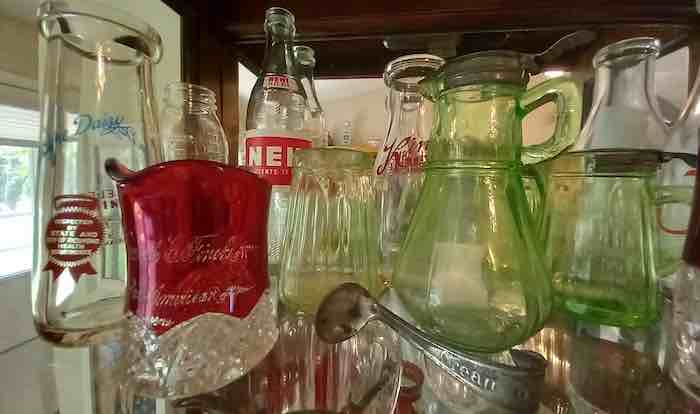
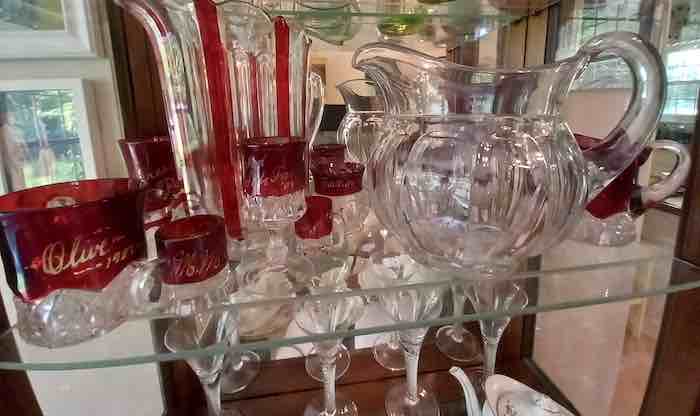
And so the history interest in me grew and grew. In my college years I made it a point to go to antique shops in unfamiliar parts of the country. A friend and I used to go to shops all along the old National Road from Maryland to Indiana. There were chairs and wonderful Heisey glass and my old favorite, ruby glass. Pink and green depression glass, little salt cellars, husking pegs, wooden bowls, enamel signs for Olga Pocahontas coal, Chief Paints, Sakrete, hotels long demolished, and Hires Root Beer all held sway in my mind at one time or another
Finding the old Spencerian handwriting instruction books at a shop in northern Indiana led me to solve the cursive writing difficulty that I, along with millions of other boys, struggled with in grade school. With the Spencer brothers as inspiration that it was possible, I eventually created my own cursive writing workbooks under the SmithHand Writing Methods rubric. I’ve sold them in every state and around the world.