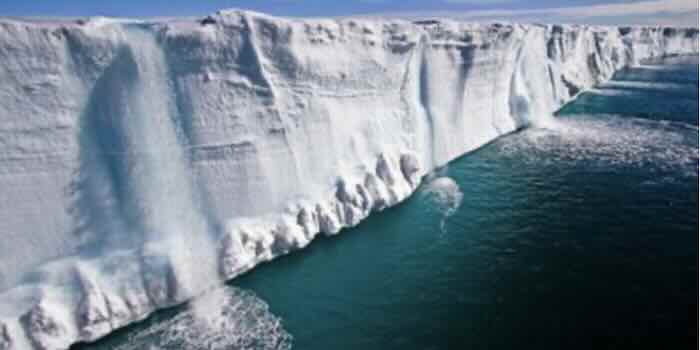
Greenland
The Greenland Ice Sheet (GIS) is incredibly large, covering 80% of Greenland in a dome of permanent ice, 1.7 million km2 and 2-3 km thick at its peak. Compared to US states, it’s something like the area of Texas, California, New Mexico, Arizona and Montana combined, covered in kilometers of ice. Estimates put it at 2.85 million cubic kilometers of ice in a region that is 3 times the size of Texas
After a careful study of 31,464 satellite records compiled over the last twenty years, a team of scientists and mathematicians from Thailand has announced that the temperatures in Greenland have been declining for at least twenty years. (9)
This is big news but probably will never see daylight in the mainstream media, who have been subjecting us to a continual barrage of propaganda that Greenland is melting.
Another study confirmed that Greenland has been cooling for several decades. (10)
So, this is significant, encouraging news that should put a final nail in the coffin of the climate change scam.
On August 29, 2022, Greenland gained a record smashing 7 gigatons of snow/ice, a reading that would be impressive at any time of the year, but one that entered the books as the largest ever daily gain during the summer, with data extending back to the 1980s. (11)
Greenland refuses to defy alarmist party orders, refusing to melt as prophesied.
And while it is true that the Greenland ice sheet lost mass from around 1995 to 2012, that trend of loss has now reversed almost completely. Greenland has been on an upward trajectory ever since.
The temperatures in Greenland’s coastal areas have indeed risen somewhat, but this could be attributed to the rise in population in those areas.
One reason that some parts of Greenland could still be warming a little is that the North Atlantic Multidecadal Oscillation has shifted, causing more warm ocean water to brush its shores.
There is also geothermal activity in the southeast past of the island. Some believe there may also be sites of volcanic activity under the glacier.