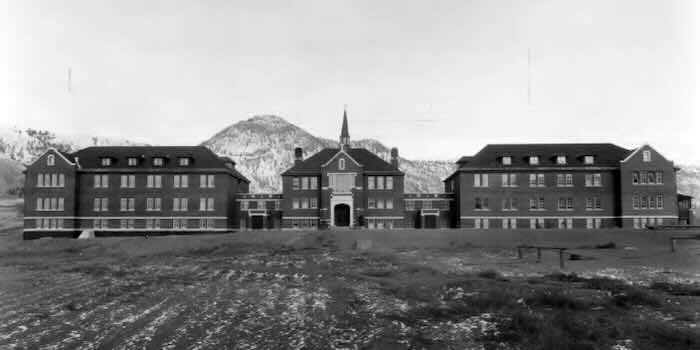
The 2021 claims triggered a wave of national and international reactions, including lowered flags, burned churches, and widespread media coverage
In a press release issued three years after the sensational claims, Chief Roseanne Casimir of the Kamloops Indian Band finally admitted that there were no “human remains,” “bodies,” “graves,” or “mass graves” found at Kamloops. What was initially reported as grave sites turned out to be mere soil anomalies, which could easily be attributed to tree roots, rocks, or remnants of prior excavations. Notably, a 1924 excavation in the same area was likely the source of the detected soil disturbances.
The 2021 claims triggered a wave of national and international reactions, including lowered flags, burned churches, and widespread media coverage. These events also prompted the ailing Pope to visit Canada, led MPs to condemn their own country as genocidal, and resulted in the enactment of costly legislation. The Canadian government allocated millions of dollars towards the search for “missing children,” who, as it turns out, never existed. The entire episode is a blemish on Canada’s history, highlighting the need for a thorough public inquiry.
Chief Casimir stated that the initial claims were based on a ground-penetrating radar (GPR) report prepared by Sarah Beaulieu, a young anthropologist from the University of the Fraser Valley. However, it is widely known that GPR can only detect soil anomalies, not graves or human remains. The actual content of Beaulieu’s report remains undisclosed, as the Kamloops Indian Band has refused to release it despite initially promising to do so. This raises serious questions about the veracity of their claims and the possibility that the band knew the information was false.