4. Fourth Trial, 1st With Pontius Pilate
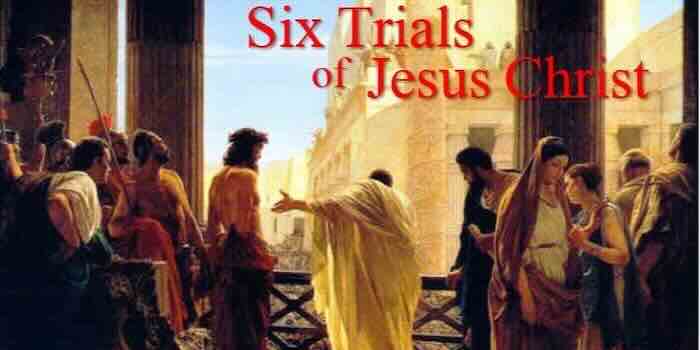
The following trial was next morning, early Friday, the sun yet to rise, probably around 5 am, according to Lawrence. Jesus was taken to Pilate since the Jews had condemned him to death, they had no right to execute anyone. Fascinatingly, while they wanted to kill Christ for claiming to be God, this was not against Roman law. In fact, Romans themselves regarded Caesar Augustus as God. So the Jews had to invent a charge worthy of death. Pilate was Procurator of Palestine; infamous for bloodthirsty rule and hating Jews. When the Sanhedrin demanded Jesus executed, he did not immediately acquiesce. Pilate asked, "What charges are you bringing against this man?" (John 18:28) The charge they leveled was: "We have found this man subverting our nation. He opposes payment of taxes to Caesar and claims to be Messiah, a king." (Luke 23:2) After questioning Christ, and finding no crime, Pilate tried to release Him. But the Sanhedrin would not acquiesce. Fearing insurrection, Pilate had him whipped. Then, not being willing to execute Him, he sent him to Herod Antipas, noting Jesus was a Galilean, and therefore under Herod's jurisdiction.
5. Fifth Trial of Herod Antipas
Christ was then sent to Herod who was greatly interested, having heard of His exploits, and hoping to see some miracles. This is the same Herod whom beheaded John the Baptist after promising his stepdaughter, Salome, anything she asked for, during a feast when she danced seductively for him. But when Herod questioned Christ, all he received was silence: "He plied him with many questions, but Jesus gave him no answer." (Luke 23:9) In response, having heard the charges, and knowing all the players, Herod declares Jesus innocent, as well.
6. Sixth Trial, 2nd With Pontius Pilate
Jesus was returned to Pilate. Both leaders declared Jesus innocent:
Pilate called together the chief priests, the rulers and the people, and said to them, "You brought me this man as one who was inciting the people to rebellion. I have examined him in your presence and have found no basis for your charges against him. Neither has Herod, for he sent him back to us; as you can see, he has done nothing to deserve death. Therefore, I will punish him and then release him." (Luke 23:13-16)
The Sanhedrin were furious Jesus defied their Temple monopoly, so he must die. Pilate did not want to execute Christ, finding him innocent. His wife also warned him: "While Pilate was sitting on the judge's seat, his wife sent him this message: "Don't have anything to do with that innocent man, for I have suffered a great deal today in a dream because of him." (Matt 27:19) But when Pilate realized the crowd was getting unruly, he decided to execute Christ, and lay responsibility on the Jewish leaders.
"What shall I do, then, with Jesus who is called the Messiah?" Pilate asked. They all answered, "Crucify him!" Why? What crime has he committed?" asked Pilate. But they shouted all the louder, "Crucify him!" When Pilate saw that he was getting nowhere, but that instead an uproar was starting, he took water and washed his hands in front of the crowd. "I am innocent of this man's blood," he said. "It is your responsibility!" All the people answered, "His blood is on us and on our children!" Then he released Barabbas to them. But he had Jesus flogged, and handed him over to be crucified. (Luke 23: 22-25)