Is Barack Mentally Malnourished? A Reasonable Explanation for Obama's Mind
Could a Practical Ignoramus Make it to the Highest Rungs of Power in America?

Kelly O'Connell , Bio and Archives--November 25, 2013
American Politics, News | Comments | Reader Friendly | Subscribe | Email Us
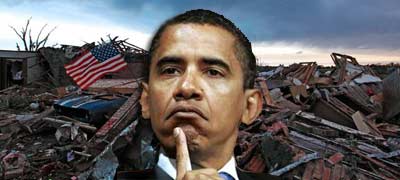
Seemingly he is satisfied by the roar of the crowd as if this were the same thing as excellence. Obama is both the most disdainful of opinion of others, and yet the most dependent upon sheer popularity to prop up his image. Would it really be so strange if an individual of high office, yet low achievement were driven by small ideas and an incipient laziness - which were somehow obscured by his position? In fact, it seems Barack has an allergy to deep thinking, the work of deep study, and in-depth analysis. This would help explain his apparent ignorance regarding the failed ObamaCare website, and virtually all of his other failures. According to this theory, it is not the times being too difficult which tripped up Barack, but his being too small in confronting the tasks which resulted in his overwhelming failure as commander in chief. Consider the following argument.
I. Mystery of Barack's Mind--Super-powered, or Second Class?
A. Sin of Self Love
Two theories help explain the contradiction of Obama's reputation. One is from his presidency, the other beforehand. First is a stunning statement made by Barack to a White House job applicant (Patrick Gaspard) in 2007 during an interview, from The New Yorker's Battle Plans, How Obama Won. He said:I think that I'm a better speechwriter than my speechwriters. I know more about policies on any particular issue than my policy directors. And I'll tell you right now that I'm gonna think I'm a better political director than my political director.Obviously, after spending a lifetime of dining on the Politically Correct flattery of his unctuous fans, Barack fell completely in love with the sound of his own voice. In the book The Obamas, Jodi Kantor describes and quotes Barack:
Obama had always had a high estimation of his ability to cast and run his operation. When David Plouffe, his campaign manager, first interviewed for a job with him in 2006, the senator gave him a warning: "I think I could probably do every job on the campaign better than the people I'll hire to do it," he said. "It's hard to give up control when that's all I've known."
B. Self-Doubt
The second theme is from Barack's days as a University of Chicago legal instructor. Given Barack's far left governing style, it's wholly unsurprising that he taught progressive and racially oriented constitutional law classes. Writes the NY Times:At University of Chicago, Mr. Obama taught three courses, ascending to senior lecturer, a title otherwise carried only by a few federal judges. His most traditional course was in the due process and equal protection areas of constitutional law. His voting rights class traced the evolution of election law, from the disenfranchisement of blacks to contemporary debates over districting and campaign finance. His most original course, a historical and political seminar as much as a legal one, was on racism and law. Mr. Obama was especially eager for his charges to understand the horrors of the past, students say. He assigned a 1919 catalog of lynching victims, including some who were first raped or stripped of their ears and fingers, others who were pregnant or lynched with their children, and some whose charred bodies were sold off, bone fragment by bone fragment, to gawkers.Obama was popular with his students, but simply refused to engage with the University of Chicago faculty, according to the NY Times:
The Chicago law faculty is full of intellectually fiery friendships that burn across ideological lines. Three times a week, professors do combat over lunch at a special round table in the university's faculty club, and they share and defend their research in workshop discussions. Mr. Obama rarely attended, even when he was in town.While one might guess that Obama has always had the highest opinion of his own mind, other folks believe the reason he avoided the University of Chicago faculty, and skips other challenges is because he lacks confidence. Is this really possible? This is the claim in a Vanity Fair article, The Lonely Guy, that states,
Just how someone wired the way Obama is got so far in politics remains a puzzlement. His aloneness is generally regarded as springing from a surfeit of self-confidence, a certitude that he really does know best. But at least one former senior administration adviser has argued that the trait springs from the opposite source: a basic insecurity on the president's part, one that keeps him from surrounding himself with strong intellectual rivals in either the White House or the Cabinet.So which is it...the Obama as genius, or Barack as insecure know-nothing? In fact, his persona could best be described as the arrogant Obama as a mask to hide who he secretly knows himself to be--the failed intellectual, would-be-messiah, and hack politician driven only by blind ideology. Of course someone who blusters through life behind such a facade, yet refuses to be examined by anyone astute, is going to conduct themselves like an arrogant jackass, always condescending to others.
II. Answers From Obamaland
A. Giving Stillbirth to a Child Named ObamaCare
Presidential historian Michael Beschloss once famously claimed Barack Obama was "the smartest guy ever to become president." (video) Contra, it would be impossible for the "smartest president in history" to also have given birth to a catastrophe like ObamaCare without some level of awareness. Yet, Barack claims he had no functional knowledge that anything was wrong with his signature piece of legislation. (see all the various disasters Barack claims he knew nothing of) Whether Barack was aware of the failures of ObamaCare has become a matter of intense speculation. But within ObamaLand, the quantum-physics derived house of mirrors, it doesn't really matter because whether ObamaCare was conceived to die in labor, or meant to rise like a horrible Godzilla-clone over America, Barack could have his goals met. The only thing that matters is that the USA is humbled and driven to its knees by big government. And herein lies the story of Obama's intellectual powers.B. Analyzing Barack's Giant Brain: Marxism on Crack
It is certain that Obama is intellectually malnourished because he long ago fell into the pit of Marxist ideology. In Marxism, one does not have to pay much attention to any details outside of Marxism/Communism/Socialism because everything else is a meaningless detail in this theory. This simplistic theory is explained by the Book Caps study guide, Marxism in Plain and Simple English: The Theory of Marxism in a Way Anyone Can Understand:Marx believed society is dominated by conflicts between the powerful and the subjugated. The Marxists theorized that throughout history the government, the ruling classes, and capitalists have oppressed everyday working people, and it is only through revolution against these rulers that everyone will enjoy true freedom and equality in a classless society. They believed capitalists (owners of farms, factories, and shops) made their fortunes by exploiting the people, whom they called the proletariat. In Marx's ideal world, everyone would work hard to better themselves and cheerfully provide assistance to those unable to work. Marxists believed all farms and factories should be owned commonly. Such common ownership gave birth to the term "communism" describing this economic structure. Marx called the idea "economic determinism", as the economic conditions of the people would determine the political and social structures of such a society. Marxists also believed organized religion was a tool the governments and the ruling classes (also called the bourgeoisie) used to keep the people, or the proletariat, from thinking for themselves and being aware, or conscious, they were being exploited.
C. Fact Blind Believers in Materialist Revolution
Believers in this theory are quintessential ideologues. Such persons are not open-minded. For example, modern liberals typically support statist policies which expand government largess and redistribute wealth, as a matter of principle. If such programs were shown to be ineffective or result in outcomes even contrary to the hopes of the creators, this would not register with such fanatics. Therefore, studying the monstrous acts against human and civil rights of the communist Russians and Chinese would mean nothing to such persons. Why this is true is undoubtedly due to the quasi-religious foundations and nature of modern liberalism. It is held by blind faith and committed to being against all proofs otherwise.D. Obamacare's Double-Bind
Given the nature of communist theory, with which the president obviously does not disagree, it is imperative that a capitalist society suffer revolution, so the underclass can be liberated. Therefore, it does not matter from a practical standpoint whether ObamaCare immediately fails, and millions of private insurance plans are sucked down into the wake behind it, leaving them wholly without healthcare coverage. Or it succeeds, and tens of millions of Americans are transitioned into insurance policies which are double or triple what they had been paying, and cannot possibly afford. Because, all of this leads to chaos, and therefore closer to the goal of government domination over the private economy. It is certain that Barack must be feeling heat from his Democrat party elected officials. But there is no reason to believe that the failure of ObamaCare is a disaster, unless it weakens the power of the party. On the alternative, every American disaster helps establish the socialist state which Obama obviously craves. For instance, Barack knows that all the Americans whom he just promised could keep their healthcare another year cannot keep their old plans, because ObamaCare needs these new subscribers to stay solvent. Therefore, Obama wins coming and going. Chaos and destruction are established, people are taught that only instability can be expected, and that big government saves the insignificant citizen. The main thing is Barack believes no one can resist his illiterate genius because his father Marx paved the way to government as god 150 years ago.E. Obama & Holy Liberal Lying
It is an interesting note that Obama clearly buys into the notion that one may lie about important matters as long as they have a higher goal to fulfill. And the move to create socialized, one-payer, government healthcare and increase state power is certainly within the category of those things which can morally be supported by lies. In fact, consider how hard Barack must be laughing as millions of health insurance policies are cancelled, while Americans panic, and he feigns concern. The little ignorant citizens don't realize the god Obama and his minions serve. Curiously, this theory of justified dishonesty also has a religious analog in Islam's Taqiya--or Holy Lying, meant to further Mohammad and Allah's kingdom.Conclusion
Certainly Barack is horrifically ignorant of many things one would expect a president to know. But he actually takes pleasure in this because none of it matters to his plans. For example, it is phenomenally unlikely he read the healthcare law or its voluminous notes because the government follows the rules only when Barack decides it's in his best interests. If not, he simply makes up new rules off the cuff. Moreover, Obama undoubtedly barely pays attention to any presidential details--which has been shown time and again, like his disastrous failed toast to the Queen of England. Given he already knows how the game ends--with communism triumphing over hated capitalism, democracy and freedom -- after the final revolution, why should he? Given his beliefs, one can hardly blame Barack for his indifference to details, his obvious sloth, boredom, self-righteousness, dishonesty and dilatory methods. After all, his master Karl Marx prophesied the rules for how the entire history of the world unfolds, including how it ends, long ago. But in the meantime, until the fated collapse, Obama is laughing like a hyena at all the patriotic fools like you and me.View Comments
Kelly O’Connell is an author and attorney. He was born on the West Coast, raised in Las Vegas, and matriculated from the University of Oregon. After laboring for the Reformed Church in Galway, Ireland, he returned to America and attended law school in Virginia, where he earned a JD and a Master’s degree in Government. He spent a stint working as a researcher and writer of academic articles at a Miami law school, focusing on ancient law and society. He has also been employed as a university Speech & Debate professor. He then returned West and worked as an assistant district attorney. Kelly is now is a private practitioner with a small law practice in New Mexico.