Trump also floated potential changes to the number of U.S. troops in allied nations in Europe at the same time. The day after Trump announced his administration was conducting a review of reducing the U.S. troop presence in Germany, he was asked if he would pull U.S. forces out of Italy and Spain, two countries that have made it impossible for the U.S. to use their bases for Iran war operations. “Why shouldn’t I,” Trump said. “Italy has not been of any help to us, and Spain has been horrible, absolutely horrible.”
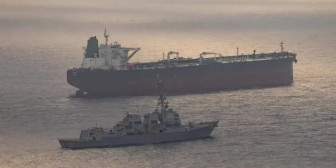
As of 30 April the CENTCOM blockade has turned back 44 commercial vessels, creating a situation in which Iran must shut off production because it has nowhere else to store the oil it is producing and cannot sell.
Iran’s Oil Production Dilemma
Iran is restoring run down sites known as “junk storage” and is also using improvised storage containers. Iran is also attempting to ship crude oil by rail to China. These steps are directed at slowing down its oil infrastructure crisis and curtailing the U.S. blockade advantage in the current standoff over the Strait of Hormuz.
Commodity analytics firm Kpler said Iranian crude oil and condensate loadings averaged 2.1 million barrels a day between April 1 and April 13. Only five cargoes have been observed since the CENTCOM blockade, bringing the average down to only 567,000 barrels a day between April 14 and April 23. Kpler has also said that Iran has been using empty tankers to store excess oil offshore. There are still several large tankers in the gulf with a capacity of about 15 million barrels. An Iranian official said those tankers cannot sail out of the Persian Gulf because of the blockade, so the Iranian government has been using tanks in oil hubs like Asaluyah to store crude, even though those tanks have been previously avoided because of their poor condition.
Hamid Hosseini, spokesman for Iran’s oil-exporters union, said that Iran is also moving oil by rail to China. Railways now link Iran to the Chinese cities of Yiwu and Xi’an. The trip is shorter than ship voyages, but it still takes weeks. Railway deliveries are more costly than ocean tankers for “teapot refineries,” the principle Chinese buyers of Iranian crude. All that makes the drive to rail less of a solution than a signal of agony in the oil production system.