Will
humans ever learn to care for their kidneys? Or will they live to count
mixed blessings – staying alive but reliant on a machine to clean the
blood. This, or a kidney transplant, is the result of end-stage kidney
failure.
Over
40 million North Americans are living with the precursor, chronic
kidney disease. Astonishingly, nine in ten sufferers are unaware they
have the problem. But the body knows, and as the disease progresses,
other health problems including stroke and heart attack can result.
A
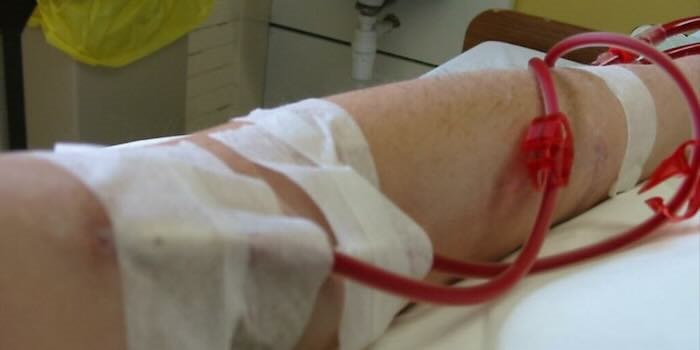
dialysis machine can remove waste products and excess fluid from the
blood when kidneys stop working. Dialysis patients require treatment 3
to 7 times a week, for three or more hours per session, in a hospital,
clinic, or at home. Year after year, the number of people needing
dialysis is increasing. Why? Because North Americans continue to abuse
the kidney’s one million delicate nephrons.
We
tend to think the bowel is the main disposal organ of the body. But
it’s the kidneys. They’re like chemists that day after day check the
balance of water by keeping it neither too acidic nor too alkaline. They
also help in the production of red blood cells. Every 30 minutes,
kidneys filter the body’s entire volume of blood.
What
are some of the problems? A discussion years ago with the Director of
the Transplant Nephrology Clinic at The John Hopkins Hospital in
Baltimore was shocking. He said that five percent of all hospital
patients developed acute kidney injury! He added this figure jumps to 23
percent for those in intensive care and to 30 percent among patients
scheduled for heart surgery.
Those
odds should be a reminder that prevention is better than cure. But the
doctor explained this was the price to pay for surgical operations and
other treatments.
Many
hospital procedures require invasive injections and catheters before
and after surgery. Doctors and the nursing staff know the dangers of
infection. Often it’s a roll of the dice that determines the outcome.
Hospitals are dangerous environments.
What
about lifestyle? Do you have “Pillitis”? It’s the terrible folly of so
many people who cannot stand even a little headache or sniffle. They
mindlessly pop a “minor painkiller”. Those pills eventually take their
toll on nephrons that clear waste products from the blood.
The
worst offenders are the nonsteroidal anti-inflammatory drugs such as
ibuprofen (Advil or Motrin) and naproxen (Aleve). Don’t believe big
pharma that there’s no need to put up with pain. But don’t swallow this
nonsense. Your purchases are great for their profits. Some headaches can
be cured by placing a cool cloth on the forehead and relaxing.
Other
huge problems are getting worse year after year. About half of North
Americans are obese. Obesity contributes to 95 percent of type 2
diabetes. Obesity and diabetes combine to trigger further health
problems for an increasing number of people, including diseased kidneys
that require kidney dialysis machines.
It’s
depressing to see people destroying healthy kidneys with often needless
medication. The other tragedy is that many people have no idea this is
happening. But there does come a time when kidney failure becomes quite
apparent. That’s when the need for a kidney machine becomes crystal
clear. Transplants are more common now, but the operation is no less of a
risk.
Nocturnal
dialysis allows patients to receive treatment while they sleep. While
this helps some to work during the day or care for children, it also
requires trained nurses to stay up at night monitoring these
individuals, either in person or remotely. More mixed blessings?
Sign-up at www.docgiff.com to receive our weekly e-newsletter. For comments, contact-us@docgiff.com. Follow us on Instagram @docgiff and @diana_gifford_jones.
W. Gifford-Jones, MD is the pen name of Dr. Ken Walker, graduate of Harvard Medical School. Diana Gifford-Jones is his daughter, a graduate of Harvard Kennedy School. Their latest book, “No Nonsense Health” is available at: Docgiff.com
Sign-up at DocGiff to receive our weekly e-newsletter. For comments, .(JavaScript must be enabled to view this email address). Follow our new Instagram accounts, @docgiff and @diana_gifford_jones