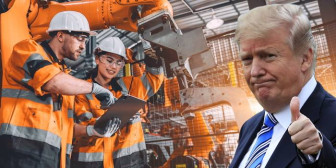
The rise of American industry went beyond mere commerce. It was constitutional destiny
Manufacturing was seen as the key component for establishing a self-reliant republic. Production, innovation and the ability to export were requirements if America was going to compete on the world stage while also ensuring that the states were not gobbled up empires eager for power and determined to end America before it gained its footing. To depend on foreign goods would be to invite foreign influence, but to build at home was to secure sovereignty.
America began as an agrarian, fractured, and vulnerable society. The fledgling country was not capable early on of producing its own arms, textiles and tools; and if that condition remained in place the new country would remain shackled to the whims of empires and a world that squabbled over lands and resources. Manufacturing was the ignition, and ultimately the muscle, behind independence. It became the engine of expansion, and the bulwark against economic servitude.
By the mid-1800s the Industrial Revolution had transformed the United States from a developing third-world union of states to a major global force. Ironworks, textile mills, locomotive factories, the Erie Canal, the railroads, and the telegraph all stitched together a continental economy that launched America from being a passive consumer to a producer, builder, and major worldwide economic giant.
The rise of American industry went beyond mere commerce. It was constitutional destiny. The young republic refused to outsource its future, and instead invested in it. Tariffs protected America’s fledgling industries, patents rewarded invention, a foundation of self-reliance fueled innovation, infrastructure enabled distribution, and the U.S. Navy protected international trade routes. The Founding Fathers did not envision a country bound by dependency, but unshackled by a dynamic free market coupled with a dynamic industrial resilience.