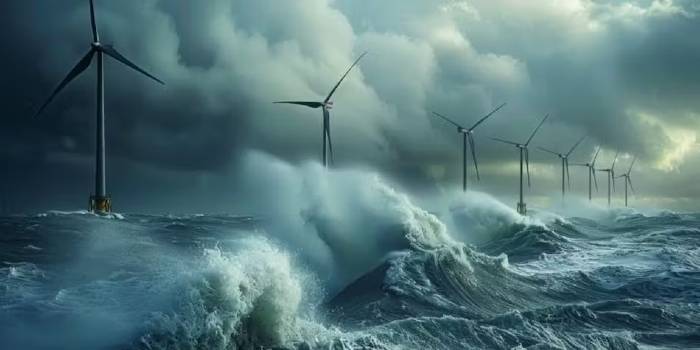
Recent cancellation of offshore wind in the US
Wind and solar systems are intermittent, use 100 times the land area, and require at least double the transmission infrastructure compared to traditional coal, gas, or nuclear power plants. Few utilities would build wind and solar systems if not for the fear of human caused global warming. But the new executive orders make it clear that the US will no longer pursue efforts to mitigate climate change. (2)
Wind energy plans for several states have been crippled. In January, Orsted A/S recorded a $1.7 billion hit on its earning as the cost of offshore wind farms, particularly in the US, kept rising. Also in January, Shell disclosed a $996 million write off following its withdrawal from the Atlantic Shores Offshore Wind project.
In early February, the New Jersey State Board of Public Utilities cancelled the bidding process for the state’s fourth offshore wind solicitation, citing the uncertainty driven by recent federal actions affecting the industry. (2)
The nation’s largest proposed offshore wind power facility in Virginia is encountering rough seas, with its developer acknowledging it will need at least $2 billion more than originally estimated. (3)
Dominion Energy, an electric utility based in Richmond, Virginia, announced its original estimate of $8 billion would not cover the cost of the project off the coast of Virginia Beach, Virginia, which the company now puts in the neighborhood of $10 billion.
The decision follows Connecticut’s refusal to participate in a tri-state wind energy agreement, leaving Vineyard unable to secure contracts for the full 1,200 MW Vineyard Wind 2 project. (4)
The controversial Lava Ridge wind project in Idaho was killed by a Trump executive order and won’t be revived. Offshore projects in the US and around the world are being cancelled or delayed. Rural resistance against wind power remains fierce. The new Congress could repeal the lavish tax credits that have long fuelled the industry’s growth. Further, as discussed later, in December, the Osage Nation secured a massive win over Enel in federal court in the longest running battle over wind energy in US history. (5)
It is easy enough to blame Donald Trump’s recent executive order withdrawing from disposition for wind energy leasing all areas within the Offshore Continental Shelf (OCS), but that is a new symptom of a far more fundamental reality. Offshore wind power is even less economic than other forms of unconventional electricity, ultimately the excess costs for all of them must be paid by power consumers and taxpayers.
Consider the Energy Information Administration’s estimates of the levellized costs of electricity production (per megawatt hour in 2022 dollars) with alternative technologies. Combined cycle natural gas generation: $42.72, ultra super critical coal: $89.33, nuclear: $71.00, photovoltaic solar: $36.27, onshore wind: $31.07, offshore wind: $100.34. (2)
For solar and wind power, those cost estimates ignore the cost of backup generation, $128.82 per megawatt hour, needed to avoid service interruptions because solar and wind generation might not be available when needed.
Wind power currently provides about 10% of the electricity generated in the United States. (6)