Looking south, we come across a similar phenomenon in Latin America. The day before the Quebec vote, Brazil held its national elections, including a presidential election in which right-wing candidate Flávio Bolsonaro outpaced leftist President Luiz Inácio Lula da Silva. While Bolsonaro did not secure the majority needed to win outright in the first round, he is the front-runner in the runoff against Lula on Oct. 25.
Bolsonaro’s upset follows a series of Latin American elections that have seen the region shift from left-wing domination to predominantly right-wing governments. Just as important, several of these governments are cozying up to the U.S., creating a de facto hemispheric alliance. While Carney looks across the Atlantic, much of the hemisphere is moving in precisely the opposite direction.
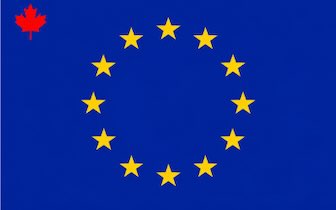
Unlike many of the Western Hemisphere’s nations, Canada has decided to poke the American hegemon in the eye, fumble a trade deal negotiation and sidle up to an imaginary Europe. As Canada has its hissy fit, even Greenland has managed to strike a security deal with Washington. Trump’s updated version of the Monroe Doctrine may be finding more willing partners than Ottawa cares to admit.
Sadly, for Canada, as we mindlessly follow Carney off the international cliff like lemmings, we refuse to address the constitutional dysfunction in our own country that fuels not one but two separatist movements.
Perhaps the best we can say about it all is that Quebec’s premier-designate has promised to wait out Donald Trump. That buys Ottawa at least two years to take the Constitution seriously. Judging by its priorities, it will spend them courting Brussels.
Posted in the National Post
Collin May, a Harvard graduate and lawyer, is a senior fellow with the Frontier Centre for Public Policy, an adjunct lecturer with the Cumming School of Medicine at the University of Calgary, and the former chief of the Alberta Human Rights Commission.