“We are not seeking to intervene in this matter but are trying to understand the approach,” wrote Mandy McCarthy, acting director general with the department, who questioned whether “you have all the information you need to advance exhumation protocols and DNA testing.”
The department censored all details of what became of the $12.1 million. However, the First Nations Health Authority that transferred $2.3 million in federal funding to Kamloops Band organizers did itemize partial expenses for nine months.
Costs included $37,500 for “marketing and communications,” $54,000 in travel, $100,000 as six month’s pay for two trauma counsellors, and $405,000 in “administrative costs,” including speaking fees and tent rentals. None involved fieldwork to identify graves.
In a censored bookkeeping entry Community Support Funding Envelope, the department said the band hired 25 unknown consultants to “provide advice and support to the Chief and Council” and paid publicists to develop “communications strategies.”
Some $532,000 was paid for security, while other funds were proposed for public works projects, construction and operation of a Healing Centre, a new museum, and funding for an Elder’s Lodge, a nursing home for Indigenous pensioners.
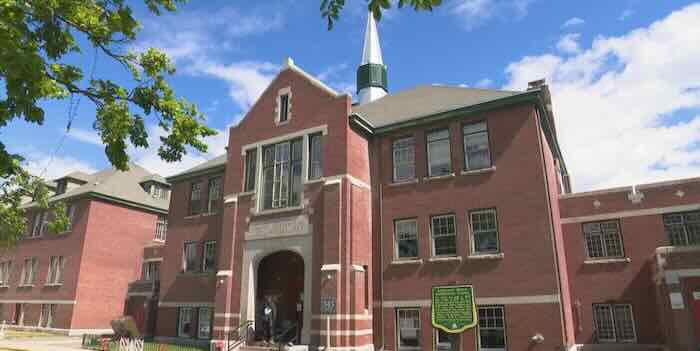
Access To Information records show that proceeds from the graves fund were spent on publicists and consultants. The First Nation also budgeted $3,292,318 to build a monument at the Residential School with Department of Canadian Heritage grants.
The community also requested funding to modernize Indian Residential School buildings for its use. The property was transferred to the band in 1978. The cost of renovations was $40 million, according to documents.