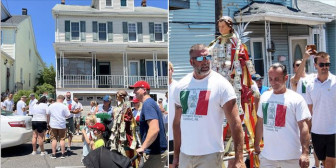
They formed the backbone of an industrial chain stretching from the mines of Northumberland County to the skyscrapers of Manhattan. To tease them about plastic-wrapped furniture or mispronounced Italian dishes is not to diminish them. It is to acknowledge the fullness of their story: the grit, the humor, the stubbornness, the pride.
The satire also paid tribute to the immigrant experience itself Italian, Polish, Lithuanian, Irish, Slovak, Ukrainian, and every other nationality that carved out a life in the hardscrabble Coal Region towns. These communities did not merely survive hardship; they transformed it into culture, cuisine, faith, and family. They built churches, raised children, buried their dead, and kept traditions alive even when the mines closed and the world moved on.
Satire is a mirror angled just enough to make the truth uncomfortable. Taken literally, it sounds absurd. Taken contextually, it hits like a confession. The problem isn’t satire missing the mark; it’s readers missing the wink.
When done well, satire is an act of affection a way of saying: I know you. I see you. I am one of you. It honors the Coal Region’s Italian-American heritage by celebrating its quirks, its contradictions, and its enduring spirit.
In the end, the piece was not a jab; it was a toast. A toast to the Zanellas, the DeFrancescos, and the various ways you spell Scicchitano. To every family that keeps a pot of gravy simmering on Sunday morning even as the world outside is collapsing. A toast to the shared heritage that binds New York Italians and Pennsylvania Italians far more than it divides them.
Vittoria Italiana, indeed.