Shipbreaking and Steel
The planetary benefits are clear. Producing new steel from old steel requires a seventh of the energy and releases a tenth of the carbon dioxide when producing it from newly excavated ore.

Jack Dini , Bio and Archives--April 21, 2025
Global Warming-Energy-Environment | Comments | Reader Friendly | Subscribe | Email Us
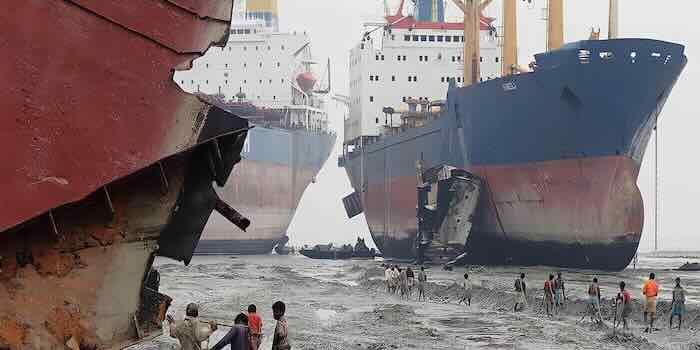
Have you ever taken a ship cruise? If so, here is one item I would wager you never thought about. That is, what happens to these enormous vessels when they have reached the end of their useful service? The answer is that they are sent to a shipbreaking facility.
So, what is a shipbreaking facility? It’s a place where ships are completely dismantled. It’s a labor-intensive mode of industry, together with primitive working conditions in developing countries and the lack of an efficient and sufficient control mechanism has caused the scrapping yards being viewed as sources of environmental and occupational health threats. In the western world, shipbreaking is an area that is viewed with suspicion due to the high level of environmental awareness. The same environmental awareness has been reflected to both national and international authorities who adopted preventative measures against the unsafe, primitive conditions of scrapping yards in developing countries in order to maintain the industry at a sustainable level. (1)
Yet the shipbreaking industry seems to be an indispensable part of the economy for developing countries since it requires a small amount of investment and, being mainly dependent on manual labor, is locally a major source for employment.
Until 2018, when China deemed shipbreaking too unacceptable there were five major facilities. Now there are four. Alexander Clapp reports:
- “Chittagong Ship Breaking Yard in Bangladesh, the world’s largest yard if measured by the shipping ton it processes: Chittagong provides feedstock for ten million tons of steel a year, the equivalent of roughly 250 of Dubai’s Burj Khalifa towers, or 70 percent of Bangladesh’s total production. Moving west to the opposite side of the subcontinent, there is Alang Ship Breaking Yard in India, the world’s largest in terms of the number of dismantlers it employs, some 60,000 migrants hailing mostly from the inland state of Utter Pradesh, to say nothing of the regiments of truck drivers, security personnel, vendors and scrap collectors Alang indirectly employs, a workforce said to exceed 200,000 in total. Three hundred miles farther along the Arabian Sea is Gadani Ship Breaking Yard in Pakistan, the world’s third largest yard. And finally, three thousand miles beyond that, along Asia’s westernmost edge, looking out on the European Continent itself, there is Aliaga Ship Breaking Yard in Turkey, one of the world’s fastest-growing yard.” (1)
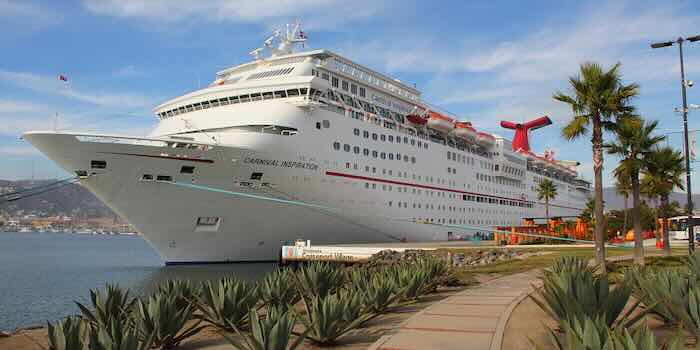
Here's an example for cruise-goers from Alexander Clapp. For a decade and a half the ‘Carnival Inspiration' had drifted around the Caribbean like a floating shrine to America’s cruise ship industry. Pride of the Carnival cruise fleet weighed the equivalent of seven Eiffel Towers. Its bow ran the length of three football fields. It emitted more carbon than a US suburb. In July 2020, after just fifteen years spent sailing the coasts of California and Florida and following an intensive review of sustainable recycling facilities, the flagship ‘Carnival Inspiration’ was dispatched by its owners to the shipbreaking yard at Aliaga. (1)
Steel From Ships
Steel is the most recycled material in the world. Less than 10 percent of the world’s plastic gets cycled back into production streams, compared to 90 percent of the world’s steel. (2)
From the point of view of the world’s environment, re-use of scrap iron and steel, which are the main output of the shipbreaking industry, is an environment friendly activity since it reduces the need for mining and production of raw metal, mainly pig iron, which is the main input of the steel industry.
The planetary benefits are clear. Producing new steel from old steel requires a seventh of the energy and releases a tenth of the carbon dioxide when producing it from newly excavated ore.
A study indicates that the production of steel from hematite ore requires 7400MJ of energy and releases 2200 kg of carbon dioxide per ton of steel, when compared with 1350MJ of energy and 280 kg of carbon dioxide when produced from scrap. (3)
The cost of destruction of earth’s topography due to mining activities should also be accounted when estimating the benefits of steel production from scrap.
However, when looked on the micro-scale, scrapping of vessels is a serious challenge for the local environment and sometimes a challenge for the health of workers. Governments who are benefitting from the economic inputs of shipbreaking are often blamed for being reluctant to take measures against environmental problems caused or to properly enforce the existing legislation.
No debate it is dangerous for the workers. However, they earn many times the income than they would from working in the fields and willingly make this trade-off. By local standards the industry has been a success. Even the lowliest laborers are proud of what they do. There is no ship too big to be torn apart this way. More important, the economic effects are substantial. The industries that have sprung from it provide a livelihood, however meagre, for perhaps as many as a million workers. (1)
References
- Alexander Clapp, Waste Wars, (Little, Brown and Company, 2025)
- M. Mizanur Rahman et al., “Life cycle assessment of steel in the ship recycling industry in Bangladesh,” Journal of Cleaner Production, Volume 135 November 1, 2016, 963-971
- Gokdeniz Neser et al., “The shipbreaking industry in Turkey: environmental, safety and health issues,” Journal of Cleaner Production, Volume 16, Issue 3, February 2008, 350-358
View Comments
John William Dini, know to all as ‘Jack’, passed away at the age of 89 on June 17, 2026. He was born in Cleveland, Ohio on Nov. 14, 1936.
He published two books, a technical book on materials science and coatings and another on environmental issues. In retirement, he wrote extensively on various environmental issues for online publications.
He was a skilled leaded glass hobbyist, creating more than 20 lamps and many panels. He was a jogger for many years, competing in over 300 long distance races. He was a slow runner, not wanting to take the glory away from others. His secret was to start slow and taper. He and Anne traveled extensively, visiting over 70 countries.
He is survived by his wife, Anne, of 67 years, and sons Mike, Steve, and Paul. If you were to meet him somewhere, he would sum up his life as ‘peaches and cream’.