Always store water correctly
Going back in time to the 1880s is far better than going back to the Stone Age, seems to me. Count your blessings every day, especially on the days that suck.
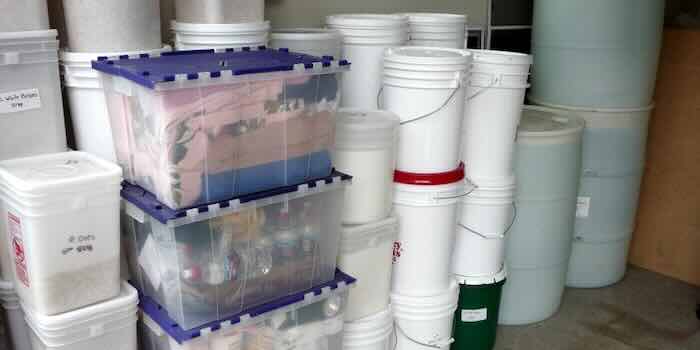
Plastic buckets are everywhere if one knows where to look. Purchasing buckets at a home center or hardware store is an option, but not always economical. There are lots of sandwich shops around these days. They all use pickles, peppers, and other condiments which often come in buckets of different sizes. Bakeries and delicatessens go through dozens of buckets in a month’s time. A big supermarket will have a large bakery area and a large deli, too. All of these containers are food grade, of course. Painters and especially drywall crews use lots of buckets which often end up in the dumpster on the site or back at the shop. Use these for storing water for multiple uses. Ask around to discover places that will save buckets for you or will let you remove them when it’s time to discard them. Some places give them away, and some charge. Suit yourself.
Just remember. Your toilet tank does not have an electrical plug. It’s a wonderful machine that works by gravity using the weight and cleansing power of water. Thank you, Thomas Crapper.
Always store water correctly. Every container must be covered or sealed to prevent mosquitoes and the diseases they carry. It must be secured with tight covers or other ways to keep children and pets out. Even a few buckets stored empty and upside down in the shed or basement can be lifesavers when disaster or a storm strikes.
We can go overboard, of course, and that means heading down the road of hoarding, but hoarding means excess. We might find cottage cheese cartons useful, but we don’t need 400 of them, and we don’t need 400 lids, either.