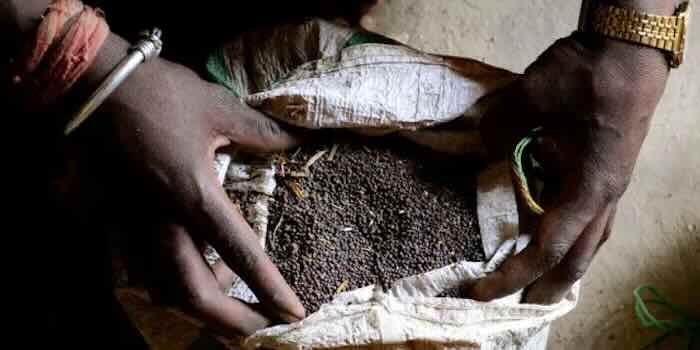
The principle spreaders of seeds, however, are humans
The principle spreaders of seeds, however, are humans. At all times, all places people have sought seeds. The 17th century English diarist John Evelyn wrote a letter to his nephew George Evelyn then on his travels in Italy, dated 30th March 1664, requesting seeds of ilex, phyllire, myrtle, and jessamine, which he says are rare in England. That was the easy part, having obtained came the successful raising and care of the tender seedlings. Suitable soil, moist but not wet, moderate light ut not direct burning sun, warm but not baking hot, lightly moving air and more all are necessary. Still disaster struck. The seedlings, newly emerged, were discovered one morning toppled over, shrivelled at their base. Collar rot, for that is what is was, is ubiquitous. A simple protection is for the seed to be sown under or through finely chopped sphagnum moss.
Gardeners, farmers, botanist alike saved seeds, grew them on themselves or exchanged them with others. By the early years of the nineteenth century, commercial seed suppliers arose. They issued catalogs often inaccurate if not downright imaginative. Usually little more than lists of the kind still seen today, they merged into the colourful catalogs available today, often accompanied by accurate descriptions and cultural suggestions. Online availability has vastly enlarged these since seeds can usually pass internationally free of restrictions.
However the dream of big business has always been rendering home gardener or farmer saved-seed rendered ineffective, not coming “true” to the parent stock. As Michael Pollan has written (2002):