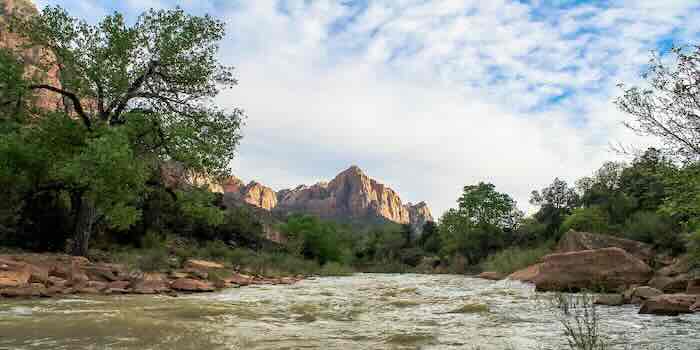
“The federal government’s policy of indefinitely retaining unappropriated lands deprives Utah of basic incidents of sovereignty over nearly one-third of the land within its borders. That diminution upsets not only the Constitution’s careful balance between federal and state power, but also the foundational principle that all States enjoy equal sovereignty. Utah’s constitutional claims against the United States are precisely the type of “high claims affecting state sovereignty” that call for an exercise of this Court’s original jurisdiction.
“While the environmental groups are telling us that this decision is the right one, we must understand that these groups were either formed by Non-governmental Organizations (NGO) to be spoilers in fights regarding property rights or older environmental groups bought out by them – same result: attacking property rights, whether those by state and local governments or by individuals.”
An institute that promotes the constitution values of faith, family, and freedom, Southerland Institute, came to the conclusion on Utah’s transfer of public lands act:
Only one-third of land in the state of Utah is locally owned. The other two-thirds is controlled from Washington, D.C. The transfer of Public Lands Act (HB 148) puts some those federal lands. back in state hands. The act demands that the United States Congress transfer public lands within the state of Utah back to the state by December 31, 2014, with the exception of national parks and monuments, certain wilderness and Department of Defense areas, and tribal lands). The act also requires Utah to pay the United States 95% of the proceeds from the sale of any land, while the remaining 5% is reserved for school funding in Utah in accordance with its Enabling Act
For well over 80 years our government has used methods that are not compatible with free state operations – and it has accelerated over the last 10 years, weakening the states abilities to deal with the 10th Amendment.