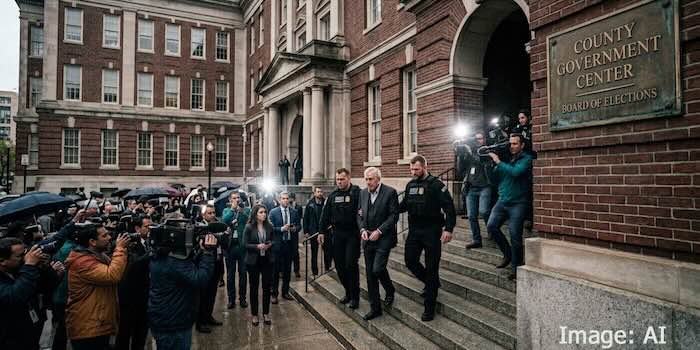
Using the Postal Service to stop mailing ballots to dead addresses, vacant lots, and unverified locations was a brilliant idea
They pointed to federal district court injunctions issued by Judges Indira Talwani and Carl Nichols arguing that because the High Court didn't lift those stays, Executive Order 14399 is permanently dismantled. They want you to believe federal oversight was turned back, leaving local election practices completely untouched for the midterm cycle.
Don't buy it.
To understand why this mainstream narrative is wrong, let's look beyond the media hype with legal history and statutory text.
On March 31, 2026, EO-14399 was issued to enforce citizenship verification and administrative integrity in federal elections. The U.S. Postal Service finalized regulations requiring uniform envelope designs, standardized Intelligent Mail barcodes, and mandatory state voter-list uploads to a centralized Federal Ballot Mail Portal. USPS was instructed to hold or return ballot envelopes that lacked proper tracking or failed verification.
Using the Postal Service to stop mailing ballots to dead addresses, vacant lots, and unverified locations was a brilliant idea that eliminates potential fraud before it starts.
A coalition of Democratic attorneys general and election officials sued, arguing that Article I, Section 4 of the Constitution gives states—not federal agencies—authority over election rules.
The timing was by strategy. They didn't act when the EO was signed on March 31, but waited until late summer when Postal Service rules were finalized and mail-in ballots were about to be printed. This let plaintiffs invoke the “Purcell principle,” a judicial rule against changing election procedures close to Voting Day.
By the time the administration appealed, the Supreme Court had no time for full arguments. On September 14, SCOTUS issued an emergency hold to avoid disrupting active election preparations, but left the broader legal merits undecided.