The Best Uses Of a Family Reunion
Survival in Tough Times: Summer 2022
Dr. Bruce Smith , Bio and Archives--July 11, 2022
HeartlandLifestyles | Comments | Reader Friendly | Subscribe | Email Us
 I recently survived a family reunion which brought people from around the world to a small town in Ohio. We had people from Japan (a military family), from Australia (long-time and incredibly loyal family friend), from both East and West Coasts, from the Heartland, and from places we don’t like to talk about. Just kidding…sort of.
They’re remarkable occasions, but they can be stressful, exhausting, and even terrifying. They’re not for weaklings, I can assure you. Consider the following angles to help make your next gathering memorable.
I recently survived a family reunion which brought people from around the world to a small town in Ohio. We had people from Japan (a military family), from Australia (long-time and incredibly loyal family friend), from both East and West Coasts, from the Heartland, and from places we don’t like to talk about. Just kidding…sort of.
They’re remarkable occasions, but they can be stressful, exhausting, and even terrifying. They’re not for weaklings, I can assure you. Consider the following angles to help make your next gathering memorable. I. Share food
The best way to do this is to prepare it yourself. Nothing teaches family dynamics quite like the most primal of family activities. Sharing food teaches love and patience and good fellowship. Tolerate no pigs or bullies or obnoxious people in the food line or around the picnic tables. When everybody has had reasonable quantities of what they like, there may be an allowance for extras, but there is to be no eating junk or loading up on anything just before a meal begins. No one should have to grit their teeth because of boorish or barbarian behavior at a reunion. Everyone must take only what they will eat, and if they don’t eat all of the first round, there is no second round. If they’re too young to decide what to choose, then someone responsible should decide for them. Everyone will be happier that way, especially the kids and the adults. Those who have manners must not be made miserable by those who do not. Sharing warmth is also primal. Even if your reunion is in the summertime, find a way to have a campfire, even a small one, in the evenings. A grill may be the only way to share heat if it’s really hot. In that case, make sure the kids come up and see how we use fire to prepare the food we will share. Make sure you have a fire tender who knows what they’re doing. Memories are made around a campfire. Bring treats.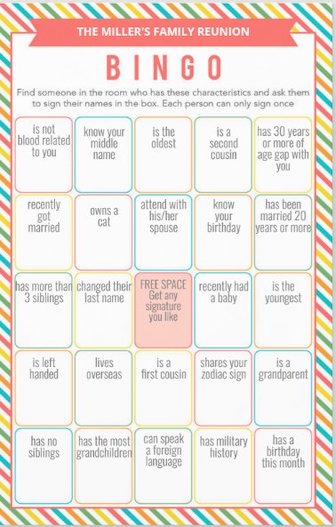
II. Instruct children
Teach them how to behave, how to show good manners, how to show love, how to be quiet, how to eat properly and on time. Teach them how to thank family members who have served in uniform. Teach them justice in all things. Teach them right and wrong, and explain why it’s so. Teach them to show respect because that is a primary way to show love, especially for those we see only rarely. Teach them to love our country and explain why we should. “We’re Canadians!” “We’re Americans!” We have much to be proud of, and people in our family have given up a great deal to make it possible for us to be here. Little flags would be nice, if you want them to grow up to be patriotic. Don’t neglect any of these.Teach perspective
Why do we have families? Where do all these people come from? Show pictures of family members when they were kids and when they were younger. Show pictures of people attending when they were little kids, have the kids guess who they are, then have that person come up to show what they look like now. Show pictures of family members who are no longer with us. Where are they on the family tree? Show photos of EVERY SINGLE FAMILY MEMBER WHO HAS SERVED THEIR COUNTRY, PAST AND PRESENT! Build a family tree with everyone’s name on it. Show the little ones where they fit in. Who is the oldest family member there? Who is the oldest family member that person remembers? When was that person born? Why are we lucky to be here? We made it through the war, through the plague, and survived the crossing. Most people have never heard of any of it.Tolerate no wrongdoing from any one of any age
If someone abets wrongdoing, keep your loved ones away from them by being everywhere with them and watching them like a hawk. What someone thinks is funny or amusing may be terrifying or abusive to a child, even if the child is older or even well into the adult years. If a child volunteers for an activity, then shrieks that they don’t want to do it anymore, it has to end right now. They may need to be comforted. If someone can’t hold their beer, then make sure they get obnoxious somewhere else. It’s not a good lesson for children or adolescents to see that addictive or unregulated behavior is funny or a good idea.Confront wrongs of the past by preventing their continuation
Adults in the family should never have tolerated abuse in the past, but any gathering is the time to end it. Adults should do the ending, but sometimes there are other ways to get it done. About 1961, at a family reunion in Indiana, my mom’s family gathered in the summertime. My mom had three sisters, and all of my uncles attended. One of these uncles had a habit of announcing that he was going to “whip” all the boys, and made them come up and try it. I was the youngest in my family, so I always just ran away and hid until the “fun” was over, but both my older brothers and my other boy cousins took their share of thrashings, and it tended to hurt and leave some bruises. My oldest brother was the oldest of all the cousins, having been born in 1944. At this gathering he would have been just about 17. He was always stocky and strong, and had never liked this game our uncle had made him join because it was a game that was always rigged. When the call went out for the boys to come over and take their licking, my brother went up first. My uncle might have taken this for an omen, but didn’t. My brother engaged him as a wrestler, lifted him up off the ground, and threw him down hard on a shoulder. It snapped my uncle’s collarbone and ended the day’s fun for him. That branch of the family was from Omaha, and they didn’t have air conditioning. My uncle required a full chest plaster cast that fixed an arm out in front of him for the remainder of that sweltering summer. And you know, there was never any more suggestion that the boys had better come over and get their whippin’. He shouldn’t have had to, but my brother put a stop to that.
Collect oral history material
Take plenty of pictures and spread them around. These days it’s easy to record audio and video together. Ask important questions of all of the attendees over , say, 40. Give us a little biography. Where were you born? Who were your parents? Who were your siblings? Are any of them here? Where did you live through the years? What was your work? What were your dreams? What makes you happy? When was your life hardest? When was it the best? There are many other important oral history questions. Duplicate what you’ve collected, identify the people and the occasion when they were collected, and send them around. Urge other people to do the same. Also collect brief audio and video recordings of all of the younger attendees. Duplicate and spread these around. We never know when there might be an empty chair at the next gathering. You won’t regret having spent the time to do a little collecting when the next occasion comes along. Include yourself in this, and getting more than one person to do it is fun, too.Let the kids come to you
Sit down and work puzzles or do crafts. Think of camp crafts. Make pot holders (with a date on them if possible), assemble birdhouse kits, have some jigsaw puzzles about, make wooden toys or race cars, paint portraits. Date and save everything! Offer fun activities, but never require them. When they approach, talk intelligently. Be wry and interesting. Expand their vocabulary and tell them how you do things. Tell them what makes you happy. Teach them history and something about the old days with those puzzles. Read to them. Teach them humor. Affect the voice of an old timer, then tell them that back in the day you took a bath in a washtub outside every summer Saturday night whether you needed it or not. And that was until you were 40 years old! Teach them to distinguish between exaggeration and bare facts.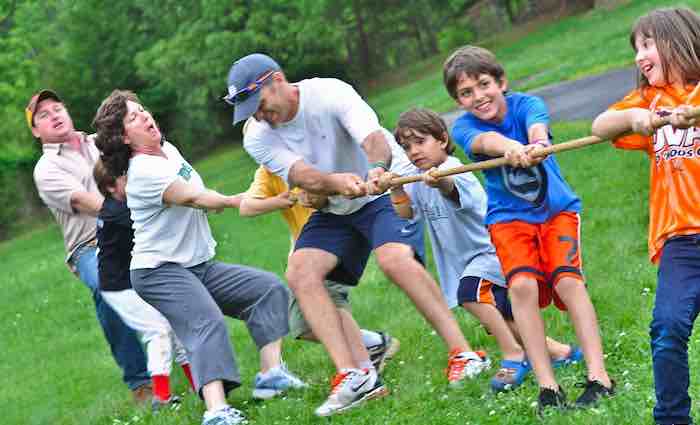
Play age-appropriate games with mixed-age groups; show them how to play ball and run the bases
Let the little ones have a chance to do well and even win sometimes. Age appropriate means whiffle or nerf balls and bats for the little ones, and maybe T-ball at that. Get some Frisbees and bubbles. There’s badminton and croquet. Get the sidewalk chalk for art, hopscotch, or foursquare. Call me old fashioned, and many do, but I get the willies when I see a soccer ball at a family reunion. Let’s face it. It’s just not right. Broom hockey, on the other hand, would be fine. If there are any family members who insist on getting stupidly drunk or who think tormenting kids is just plain fun, think about this idea. When the next family reunion is scheduled for Peace River, Paulding, Paducah, or Peoria, tell them you’ve changed it to Poughkeepsie or Perth, and you really hope they’ll be able to make it there!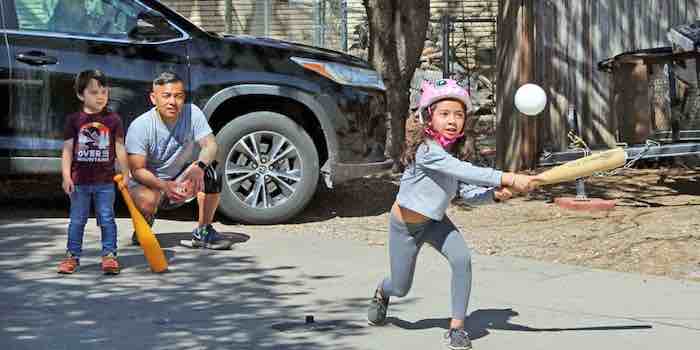
View Comments
Dr. Bruce Smith——Bio and Archives
Dr. Bruce Smith (Inkwell, Hearth and Plow) is a retired professor of history and a lifelong observer of politics and world events. He holds degrees from Indiana University and the University of Notre Dame. In addition to writing, he works as a caretaker and handyman. His non-fiction book The War Comes to Plum Street, about daily life in the 1930s and during World War II, may be ordered from Indiana University Press.