Professor Frances Widdowson was recently fired from Mount Royal University (MRU) for challenging the validity of the subjective, anti-Enlightenment, alleged “Knowing” of Indigenous “Knowledge Keepers,” and questioning the concept of “Indigenization” of universities. In her article, Billie Remembers, she shows the anti-intellectual charlatanism of her former colleagues at MRU, and the rent-seeking nature of a large part of “Indigenous Industry, that relies upon characterizing Canada as a perpetrator of genocide.”
Writers James Pew and Jonathan Kay, the latter of whom initially believed the Kamloops hoax, try to explain how and why the legacy media failed Canadians. Mr. Pew says that “the opportunity to perform virtue through self-loathing is too tempting for many to resist.”
But it is the obligation of professional journalists to, in fact, resist the temptation to lazily fall into line with a popular narrative that is merely asserted but not proven. They have an obligation to dig and get at the truth, however unpopular it may be.
Jonathan Kay, in his article A Media-Fuelled Social Panic Over Unmarked Graves, attributes the spectacular failure of the legacy media to “the herd behaviour of Canada’s intellectual class.”
Worse, as Mr. Kay points out, now that the truth is known, “no single media outlet has any interest in walking back its previously published misinformation.” Again, coverup is preferred over truth. Admitting mistakes is, in fact, fundamental to generating and keeping trust with the media’s audiences. Consequently, Canadians are losing faith in the mainstream media’s integrity.
In saying the obvious, Clive James wrote: “Even the most fleeting piece of journalism should be written as if the writer might need to defend it on the day of judgement–and for any craftsman proud of his work, the day of judgement is always today.”
Michael Melanson, in his article The Banality of Genocide, made in Canada, focussing on the requirement of intent to prove genocide, demolishes the notion that any aspect of residential schools was genocidal. Mr. Melanson’s arguments on the absence of evidence of a genocide in Canadian residential schools are supported by distinguished Vancouver lawyer D. Barry Kirkham’s article, Neither Truth nor Reconciliation, a thorough deconstruction of the TRC Report. This article is a review of a book that should be regarded as a companion to Grave Error, From Truth Comes Reconciliation: Assessing the Truth and Reconciliation Report, edited by Rodney Clifton and Mark DeWolf, a book that was the first to shed light on the many shortcomings of the TRC Report and the many positives of residential schools.
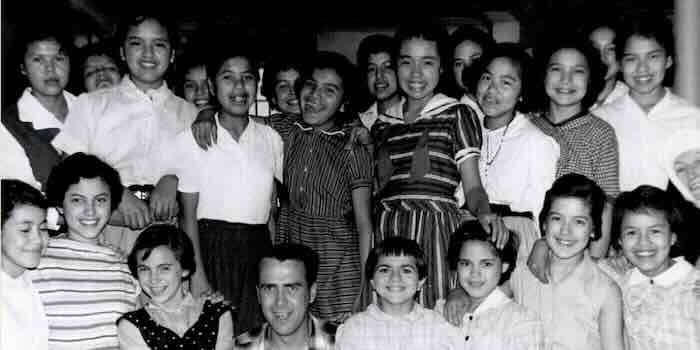
Throughout Canadian history the Canadian intent towards Indigenous peoples has been liberal, conscientious, and ameliorative. This is convincingly shown in articles by Pim Wiebel and Professors Ian Gentles, and Rodney A. Clifton, which put positive flesh and bones onto the day-to-day experiences of residential school students and employees.
Our elites have wilfully driven Canadians away from the truths revealed in Grave Error. In so doing they have betrayed us, divided us, and harmed our country. As the editors of Grave Error write in the conclusion:
The flight from truth makes true reconciliation impossible. Why will Canadians want to extend the hand of friendship to Indigenous people who continue to call them criminals and murderers? Why will Indigenous people want to engage in cooperation with people whom they have been led to regard as criminals and murderers? Recovering a more balanced picture of residential schools, finding the truth, is the only way to genuine reconciliation.
Fortunately, following From Truth Comes Reconciliation, Grave Error continues the lengthy process of unravelling the falsehoods about residential schools perpetrated against the Canadian people by our elites and telling the much more truthful and balanced story.
Canadians who are concerned with this critical issue must read Grave Error- How the Media Misled Us (and the Truth About Residential Schools).
Peter Best is a retired lawyer living in Sudbury, Ontario. He is the author of the book, There Is No Difference- An Argument for the Abolition of the Indian Reserve System and Special Race-based Laws and Entitlements for Canada’s Indians. (thereisnodifferfence.ca). An expanded version of this article can be read at thereisnodifference.ca.