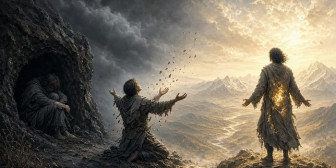
The Apostle Paul says the same thing to the church at Corinth: spiritual truths are discerned only by the Spirit, and to the person without the Spirit, they are simply foolishness (1 Corinthians 2:13–14). This was not an insult aimed at outsiders. Paul wrote it to correct a church that had begun to organize itself around its favorite preachers, as if brilliant teaching --rather than the grace of God--was what had opened their eyes. It wasn't. It never is.
Like Nicodemus, we do not arrive at Christ by academic effort or by a clever search. We do not stumble onto Him the way one might stumble onto a good idea in a business meeting. We arrive by revelation, or we do not arrive at all--and that should unsettle anyone, like Nicodemus, who has built a career on being the smartest person in the room.
We are dependent on God to give us that revelation
If the first truth is hard for the intellect, the second is harder for the will. Paul prayed constantly for the believers in Ephesus, asking God to give them a spirit of wisdom and revelation so that they might grow in the knowledge of Him (Ephesians 1:16b–17). Notice what Paul does not do: he does not urge them to study harder or try harder. He asks God to give them what only God can give.
This is where the old debate--free will against divine election--tends to surface. But regardless of where you land on that question, most of us find the second half far more uncomfortable than the first. We can, with some effort, accept that we did not save ourselves. It is much harder to accept that we cannot even understand God's ongoing will for our lives by our own effort--that the wisdom for the next decision, the next season, the next assignment, has to be given, not deduced. We would rather run the numbers, weigh the options, and call the result discernment. Paul's prayer suggests something less tidy: that even a mature believer's next right step is a gift asked for, not a conclusion arrived at.