


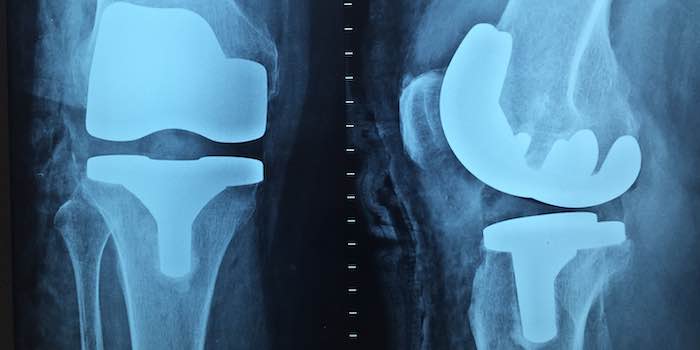
When osteoarthritis in the knee is causing you pain, how do you know whether to hang in there and take it or to accept the risks of going under the knife in hopes of bouncing back stronger? It’s not an easy question. Many factors need to be part of the decision.
Osteoarthritis (OA) is the most common form of arthritis, often described as a “wear and tear” problem, and usually found in the knees, hips and hands. Symptoms are usually mild initially – stiff joints and reduced flexibility. It gradually progresses to more noticeable swelling and aching caused by the breakdown of joint cartilage and the underlying bone.
According to the Centres of Disease Control and Prevention, over 32 million Americans have OA. The Arthritis Society Canada says about 1 in 5 Canadians have the condition.
Unfortunately, there’s no cure. But treatment options include physiotherapy, acupuncture, massage, and adaptations at home and work to decrease stress to affected joints. OA medications range from common acetaminophen to topical creams containing non-steroidal anti-inflammatory drugs to corticosteroid injections.