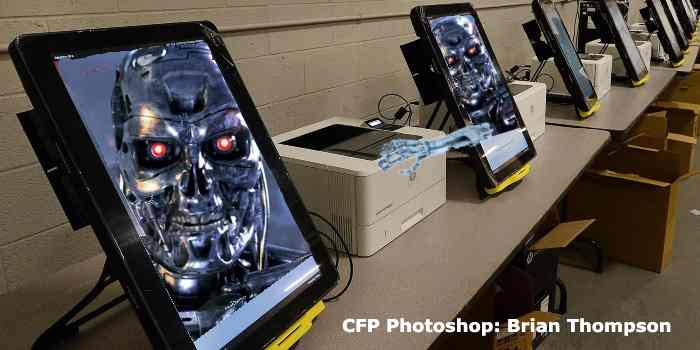
Despite claims to the contrary, most of our election systems, from poll books, to tabulators, to voter databases, to election management systems are deeply internet connected
The results of a special investigation commissioned by president Clinton could have been written today as most of the problems identified then still exist today. Having been deeply involved in election integrity investigations for a few years now, as well as having designed and developed computer systems, I know better than many just how easily our systems can be compromised.
The growth of the internet has only complicated problems. Despite claims to the contrary, most of our election systems, from poll books, to tabulators, to voter databases, to election management systems are deeply internet connected, sometimes even without the knowledge of local officials. Various forms of security are applied in vain attempts to ensure these systems cannot be penetrated and manipulated. Virtual Private Networks (VPNs) are often used and touted as ensuring our systems cannot be hacked. Yet VPNs can be compromised in a variety of ways, often through human agency, and must be considered to provide only casual security. Almost every government system has been penetrated at one time or another, including high security military systems. Why should we consider our election systems, with only casual levels of security, to be invulnerable?
Of course, for those who seek to control the outcomes of our elections, such vulnerability is a feature. Imagine if China or Iran or some other hostile power were able to influence results to the point that they were able to elect a President who would weaken our military, increase our dependence on foreign energy sources, allow unfettered penetration of our borders by hordes of migrants, including saboteurs, or sap our will with social disruptions around race and gender. Would this not be worth the effort?
Or consider those within our country who hold power and who wish to prevent election of officials who might seek to interfere with their power. Might they not wish to be able to manipulate elections in ways difficult to prove even while being obvious in effect? Why not control the machines to where the push of a button can give them the results they want? All that is needed is that honest traditional methods be outlawed in favor of machines they can control.