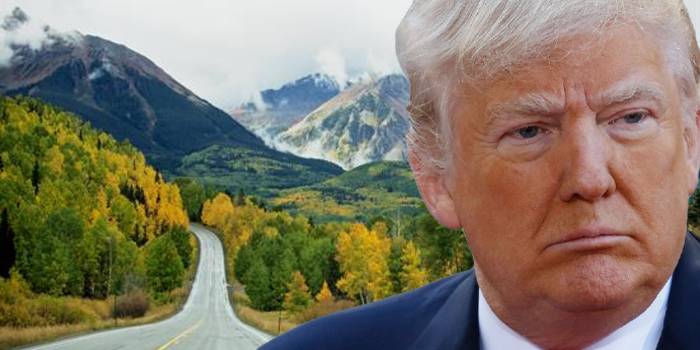
Federal land grabs violate the Founding Fathers’ intent, especially when lands are held indefinitely without fulfilling the “needful” purpose
Some of my opponents may also raise concerns about the purpose of conservation behind the ownership of many of these lands in question. With that in mind, I am not saying that land should not be set aside in certain cases for conservation. As a Christian I am a firm believer in being good stewards of our planet. I also recognize the biblical wisdom of Jeremiah 17:9, “The heart is deceitful above all things, And desperately wicked; Who can know it?” The verse essentially reminds us that if we operate on feelings alone our hearts will guide us in a wicked direction. It is important for us as humans with a flawed human nature to also take into consideration a pragmatic way of looking at things, use our discernment, logic, common sense and critical thinking.
I also wrestle with the fact that establishing a sovereign wealth fund may teeter on the edge of constitutionality, and many of the mechanisms attached to the idea are downright unconstitutional for sure. When it comes to the ownership of properties the Constitution is clear that such ownership is limited to what is necessary for “needful buildings” like forts, arsenals, dockyards, and other government functions with state legislature consent. The only exception would be properties obtained from foreign sources by way of treaty.
Historically, Article I, Section 8, Clause 17 of the Constitution, the part that defines that federal properties must be obtained by purchase, consent of the states, and for needful buildings has been stretched by federal agencies to justify vast land holdings, especially in western states, where the federal government owns over 50% of land in states like Nevada. Federal land grabs violate the Founding Fathers’ intent, especially when lands are held indefinitely without fulfilling the “needful” purpose.
Trump’s active exploration of selling federal lands, particularly underused parcels managed by agencies like the Bureau of Land Management (BLM) and the Department of Housing and Urban Development (HUD), could be seen as a move that could also reverse much of the consequences of the federal government violating the Constitution in the past with massive land grabs. A joint task force has been formed to identify parcels suitable for affordable housing development or other designs for land use, but unfortunately no formal restrictions or conditions are being considered.
While I am not a fan of the federal government owning so much land or over-regulating in the private sphere, I am concerned that once these lands are transferred to private ownership there may be issues that will arise regarding environmental protections, public access, or the lands only being used for accessing particular resources or the reality that real estate developers may use their ownership of the land to prioritize profit over common sense public interest.