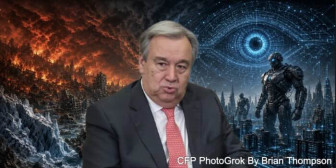
It is naïve to expect any different result from an agreed-upon international governance mechanism to address the risks of potentially out of control AI technology. China will manipulate the system, as usual, to its national advantage. Developing countries will have their hands out, as usual, for more money from developed countries.
Moreover, terrorist non-state actors like the Iran-backed Houthis, who are already using AI technology to develop advanced guided weapons, would not be covered by any UN AI agreement among member states and would not abide by it anyway. During his press conference, Guterres’ answer to the Houthis’ military advance to control the strategic Bab al-Mandab Strait, jeopardizing global oil shipments and threatening nearby internet cables that carry nearly one-fifth of the world's web traffic, is “negotiation.” You can't get anywhere trustworthy negotiating with terrorists.
Secretary General Guterres stressed the need to reform the United Nations and other international multilateral institutions through what he called “a redistribution of power.” He pointed specifically to the need to reform the Security Council and the Bretton Woods international financial arrangements. Look under the hood and it will be evident that “redistribution of power” to him means giving more power to the free-loading developing countries at the expense of the successful developed countries that are carrying the financial freight.
Commenting on his lack of real geopolitical power as UN Secretary General, with no army or intelligence services at his disposal, Mr. Guterres said that even so “it's very important that the Secretary-General of the organization is a reference in relation to defending in all circumstances and without double standards, the Charter, international law, international humanitarian law, and the values of the UN.” He expressed his belief that this “has been done.”