What was the Dangerous Purpose?
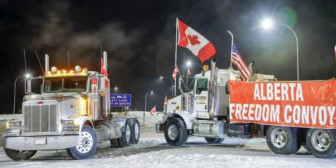
Chris Carbert’s lawyer, Katherin Beyak, summarized, “The evidence wasn’t there for Chris needing to have a firearm for self-defence at the blockade, that evidence just didn’t come forward. That’s why I’m trying to figure out what the dangerous purpose was. Other than, perhaps, the jury didn’t think there was a valid purpose for having a firearm at the protest. I don’t know, and we can’t ask them (the jury).” Asked about the jury decision, Beyak said the jury decision may have been “more of a statement that this was supposed to be peaceful, and you shouldn’t have had firearms there.”
The message from this verdict to Canadians may mean even if you are unarmed, you shouldn’t have firearms in the vicinity of a municipality where there is a protest.
Explosive Witness Testimony
The jury also found Tony Olienick guilty of possession of explosives for a dangerous purpose.
Brian Lambert, a sandstone quarry owner and colleague of Olienick, testified at the trial. He described an explosive device, nicknamed “firecrackers” in the business, he observed Olienick use years ago. Lambert testified Tony Olienick use these “firecrackers” to dislodge stone that would get sold and repurposed for construction. Olienick’s father served as a peacekeeper in the Canadian Armed Forces in Cypress. A stone quarry in southern Alberta occasionally got drill bits stuck in the stone. Olienick’s father created an explosive device with plumbing pipe, ordinary gunpowder, and a fuse that can be purchased at a hobby store.