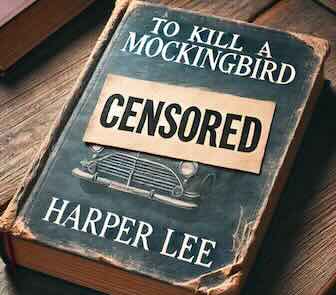
The problem isn’t just hypocrisy; it’s the deeper issue of who gets to decide what is “appropriate.” The Surrey School District removed To Kill a Mockingbird from its recommended reading list, arguing that modern books provide better ways to discuss race and discrimination. Meanwhile, in Prince George, The Hobbit is deemed problematic, raising the question: Is censorship truly about student well-being or about suppressing certain perspectives while elevating others?
Harper Lee, the author of To Kill a Mockingbird, would have argued that her book was meant for young readers. After all, its protagonist, “Scout” Finch, is only eight years old. Banning literature—especially books that challenge prevailing social views—does not educate students; it shelters them from history, critical thought, and moral complexity.
John Milton addressed this very issue in 1644 in his essay Areopagitica, warning that censorship destroys the very foundation of reason: “As good almost kill a man as kill a good book; who kills a man kills a reasonable creature, God’s image; but he who destroys a good book, kills reason itself, kills the image of God as it were in the eye.”
Perhaps, in an ironic twist, school districts should take a cue from authoritarian regimes like Saudi Arabia, where censors don’t ban books outright but simply black out offending words. That way, To Kill a Mockingbird could be kept on the shelves—just in a much shorter and less meaningful form.
Of course, we know the truth: The fight over books in schools is not about protecting children. It’s about controlling the narrative. If students are to be prepared for the real world, they should be exposed to the complexities of history, literature, and human nature—not just the sanitized, ideologically approved versions handed to them by school administrators.
If there are tigers in the street, students should learn about their habits. But today’s censors would rather tell children there are no tigers at all.
Jim McMurtry, a former teacher and principal, wrote a PhD dissertation titled A Case Against Censorship in Literature Education four decades ago. This commentary was submitted by the Frontier Centre for Public Policy.