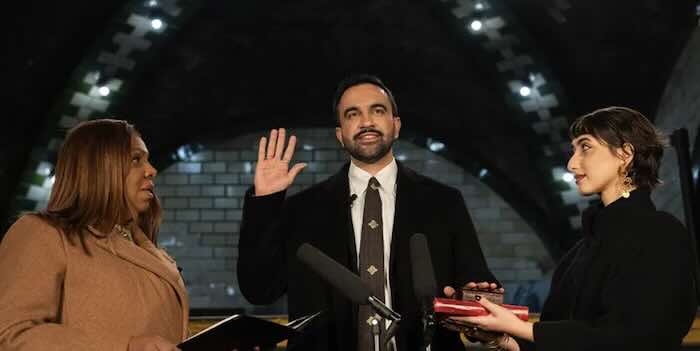
Linguistic sleight‑of‑hand that has always preceded the erosion of liberty
Mamdani declared, “We will build a city where prosperity is shared, not hoarded.”
To the untrained ear, it sounds noble. But anyone who has studied the rhetoric of Marx, Lenin, Castro, or Chávez recognizes the formula:
- Redefine prosperity as a collective asset.
- Redefine individual success as theft.
- Redefine government power as moral necessity
This is the linguistic sleight‑of‑hand that has always preceded the erosion of liberty.
He continued, “Housing is a human right, and we will democratize it.”
“Democratize” is a word that sounds empowering but from the mouths of socialists historically means centralization, regulation, and the slow suffocation of private property. It’s the same vocabulary that turned once‑vibrant cities and countries in history into bureaucratic wastelands.
Then came the crescendo: “We will build a city where dignity is guaranteed.”
Guaranteed? By whom? Government bureaucracy?
Guaranteed at what cost? Taxing the rich? As the song, “I’d Love to Change the World” by Ten Years After (1971) goes, “Tax the rich, feed the poor, Till there are no rich no more.” Then, the inevitable question becomes, “Then what?”
Guaranteed through what mechanism? In the end it always becomes through government force.
This is the classic utopian promise: a world where government becomes the arbiter of dignity, fairness, and morality. And once government claims the power to guarantee dignity, it inevitably claims the power to define it, apply it, and enforce it. What follows is mismanagement, corruption, a loss of innovation and industry, shortages and rationing, violence, poverty, and ultimately death.