Artificial bug eyes
Nanostructures on an artificial bug eye resemble a shag carpet when viewed with a powerful microscope

By American Chemical Society —— Bio and Archives--January 14, 2019
Science-Technology | Comments | Back To Full Article
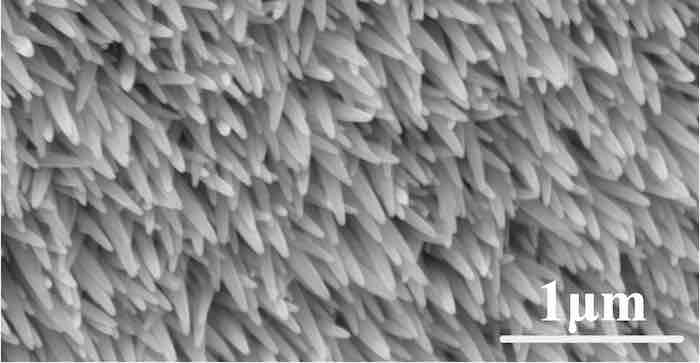 Single lens eyes, like those in humans and many other animals, can create sharp images, but the compound eyes of insects and crustaceans have an edge when it comes to peripheral vision, light sensitivity and motion detection. That's why scientists are developing artificial compound eyes to give sight to autonomous vehicles and robots, among other applications. Now, a report in ACS Nano describes the preparation of bioinspired artificial compound eyes using a simple low-cost approach.
Welcome to CFP’s Comment Section!
The Comment section of online publications is the new front in the ongoing Cancel Culture Battle.
Big Tech and Big Media are gunning for the Conservative Voice—through their Comment Sections.
Canada Free Press wishes to stay in the fight, and we want our fans, followers, commenters there with us.
We ask only that commenters keep it civil, keep it clean.
Thank You for your patience and for staying aboard the CFP ‘Mother Ship’.
READ OUR Commenting Policy