China Looks to Increase Natural Gas Consumption and Supply
China is expected to become the world's leading LNG importer over the next decade

By Institute for Energy Research —— Bio and Archives--July 17, 2018
Global Warming-Energy-Environment | Comments | Back To Full Article
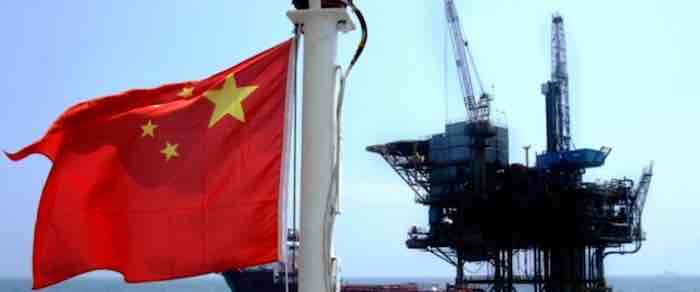 In 2017, China was the world's fastest-growing natural gas market. Consumption grew by 15 percent--over twice the rate of economic growth--and liquefied natural gas (LNG) imports grew by 46 percent. In 2013, under the country's National Action Plan on Air Pollution Prevention and Control, natural gas became a central part of the Chinese government's plan for fighting air pollution. China's thirteenth Five-Year Plan (2016-2020) set goals for increasing the use of natural gas, including almost doubling the share of natural gas in China's energy mix in five years--providing up to 10 percent of China's primary energy by 2020 and 15 percent by 2030.
In 2017, natural gas accounted for about 7 percent of China's primary energy consumption. Over two-thirds of the natural gas consumed in China is used in industry and buildings (mainly for heating) with little used in power generation due to China's staggering coal-fired capacity in that sector. The Chinese economy relies heavily on coal, which produces more particulate matter and other criteria pollutants than natural gas. Transitioning from coal to natural gas can reduce China's soot and smog. China suffers from serious air pollution problems.
In 2017, China was the world's fastest-growing natural gas market. Consumption grew by 15 percent--over twice the rate of economic growth--and liquefied natural gas (LNG) imports grew by 46 percent. In 2013, under the country's National Action Plan on Air Pollution Prevention and Control, natural gas became a central part of the Chinese government's plan for fighting air pollution. China's thirteenth Five-Year Plan (2016-2020) set goals for increasing the use of natural gas, including almost doubling the share of natural gas in China's energy mix in five years--providing up to 10 percent of China's primary energy by 2020 and 15 percent by 2030.
In 2017, natural gas accounted for about 7 percent of China's primary energy consumption. Over two-thirds of the natural gas consumed in China is used in industry and buildings (mainly for heating) with little used in power generation due to China's staggering coal-fired capacity in that sector. The Chinese economy relies heavily on coal, which produces more particulate matter and other criteria pollutants than natural gas. Transitioning from coal to natural gas can reduce China's soot and smog. China suffers from serious air pollution problems.Welcome to CFP’s Comment Section!
The Comment section of online publications is the new front in the ongoing Cancel Culture Battle.
Big Tech and Big Media are gunning for the Conservative Voice—through their Comment Sections.
Canada Free Press wishes to stay in the fight, and we want our fans, followers, commenters there with us.
We ask only that commenters keep it civil, keep it clean.
Thank You for your patience and for staying aboard the CFP ‘Mother Ship’.
READ OUR Commenting Policy