The Story of the Communist People's House
The building was never finished and inaugurated before Ceausescu’s execution on Christmas Day 1989. It remains unfinished today, a symbol of the megalomaniacal communist regime ruled by one obsessed man and his insane wife;

Dr. Ileana Johnson Paugh , Bio and Archives--September 30, 2026
World News | Comments | Reader Friendly | Subscribe | Email Us
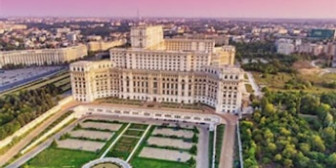
The People’s House, described as hideous by the West, now renamed The Palace of the Parliament, stands out as the heaviest building in the world, around four million metric tons, with 365,000 square meters, and eighty-four meters in height. It is about two percent larger than the great pyramid of Giza.
The building is so heavy that it sinks 6 mm every year. It is the most extreme example of the communist systematization program (urban planning) when architectural gems were demolished to make room for Ceausescu's grandiose plans.
One of its engineers spoke about the two anti-nuclear attack bunkers beneath the building with twenty kilometers of tunnels, large enough for electric cars. The allegation that the tunnels reach Otopeni airport has not been proven.
It is said that the origin of the building was Ceausescu’s visit in North Korea in 1971 when he experienced monumental buildings and large boulevards. The idea grew in his mind for a magnificent palace when the earthquake of 1977 turned many buildings in downtown Bucharest into rubble.
He ordered an entire area, Uranus Izvor, about seven square kilometers, erased completely. To realize his dream, tens of thousands of people were forcibly removed from their homes, old churches demolished, Brancovenesc hospital, 37 factories and workshops, Mihai Voda Monastery, and the National Archives were demolished and moved elsewhere.
The People’s House was built around the clock by soldiers and “volunteers.” The chief architect was a twenty-eight-year-old woman named Anca Petrescu who supervised seven hundred architects. The materials, walnut and cherry wood, marble, and stone, were extracted from the Carpathian Mountains. The chandeliers were made from 3,500 tons of Romanian crystal. The wool rugs were so large that they could not have been manufactured in the factory, they had to bring the looms inside and the rugs were woven for each room as needed.
Ceausescu’s palace was built as a symbol of communist power at a time when the population was standing in endless lines daily for bread, cooking oil, flour, rice, and other necessities. Everything was rationed, people were told how much calories to consume according to their profession, medical care was rationed, medicines were rationed, and people were cold in their apartments and had to endure the lack of water and rationed electricity delivery.

The building was never finished and inaugurated before Ceausescu’s execution on Christmas Day 1989. It remains unfinished today, a symbol of the megalomaniacal communist regime ruled by one obsessed man and his insane wife.
View Comments
Dr. Ileana Johnson Paugh, Ileana Writes is a freelance writer, author, radio commentator, and speaker. Her books, “Echoes of Communism”, “Liberty on Life Support” and “U.N. Agenda 21: Environmental Piracy,” “Communism 2.0: 25 Years Later” are available at Amazon in paperback and Kindle.