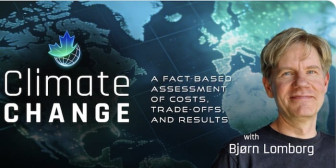
Climate Change: A fact-based assessment of costs, trade-offs, and results is a new multimedia research and educational project by the Fraser Institute in collaboration with Dr. Lomborg’s Copenhagen Consensus. It offers Canadians a data-driven analysis of the real risks posed by climate change and measures the substantial costs and trade-offs that accompany many climate policies.
“Throughout history, when confronted with even immense challenges—humanity has innovated its way to even more prosperity for everyone, and tackling climate change should be no different,” said Elmira Alikabari, director of natural resource policy at the Fraser Institute and coordinator of the project.
“The only realistic long-term solution to climate change is to pursue low-carbon energy research and development, and we’re not doing enough of that either in Canada or around the world.”
The latest essay in the series, How Canada Can Respond Smartly to Climate Change, finds that in Canada, investments in low-carbon energy research and development (as a share of the size of the economy) was 18.5 per cent lower in 2024 than green R&D spending levels in 1974. And levels in 2024 were 38 per cent lower than the 50-year peak in Canada in 1983.
Previous research has found that every $1 invested in low-carbon energy research and development can prevent as much as $11 in long-term climate damages.
“Telling voters across the world to be poorer, colder, less comfortable, with less meat, fewer cars and no plane travel will never work, and will certainly not be copied by China, India, and Africa,” reads Lomborg’s essay.
“What will work is innovating a future where green is cheaper.”
To read the essays in the series, explore the data and to learn more, visit www. Fraser Institute--Climate Change
Media Contact:
Jake Fuss, Director, Fiscal Studies
Fraser Institute
To arrange media interviews or for more information, please contact:
Bryn Weese, Fraser Institute
604-688-0221 ext.589
bryn.weese@fraserinstitute.org