Far Better Than DrudgeUnfiltered News • Daily Headlines

A Supreme Court Case Energy Companies Must Win

Giving in to activists’ demands will have very real impacts on our society, impoverishing us and our cities for generations to come


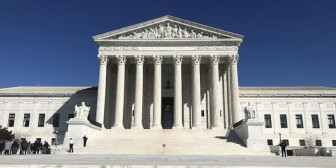
Climate activists are now taking oil and gas companies to court for alleged harms to the climate. On October 5, 2026, the U.S. Supreme Court heard oral arguments in Suncor Energy v. County Commissioners of Boulder County to determine whether federal law bars state and local governments from bringing climate-related lawsuits against energy companies in state courts.


Our society depends on the oil and gas industry, and by penalizing big oil companies, everyone will suffer from higher costs

This is crucial to the success of American energy: although the case started in Boulder, Colorado, its effects will be far-reaching. If energy companies are held responsible for climate-related damages, they could face bankruptcy, and electricity prices could soar throughout the US. A brief from the Washington Legal Foundation wrote that such a result “would have cataclysmic consequences for the Nation—indeed, the world…If even a fraction of” the plaintiffs “sue and win multi-billion-dollar judgments.” Additionally, “it would wipe out the corporate infrastructure (foreign and domestic) undergirding over 80 percent of world energy use and 83 percent of our domestic mix.”

Frank Lasee, energy expert and author at Truth in Energy & Climate, said that “the cost lands on companies with American assets, and then on American families. Gasoline, diesel, and heating fuel are priced in markets, and that is where a judgment gets recovered. Lower-income households spend the largest share of their income on energy and will feel it first.” Our society depends on the oil and gas industry, and by penalizing big oil companies, everyone will suffer from higher costs.

We have seen roughly three dozen local jurisdictions in the US sue oil and gas companies due to climate change over the past decade. They claim that the companies knowingly pollute the planet and have misled the public, irresponsibly harming people and the environment. Yet so far, litigations haven’t been successful. In 2021, for instance, federal courts dismissed a lawsuit brought by New York City against Chevron, BP, and other oil companies. Yet dozens of lawsuits similar to the Boulder County case are still pending, and so the result of Suncor Energy v. County Commissioners of Boulder County will set the precedent for how the others proceed. In all, these cases could amount to billions of dollars being paid out by energy companies, pushing many of them to bankruptcy.


Federal law prevents states and local governments from bringing climate-related lawsuits seeking damages from energy companies

This hearing was the first time the U.S. Supreme Court (SCOTUS) heard oral arguments on whether federal law prevents states and local governments from bringing climate-related lawsuits seeking damages from energy companies. In 2018, Boulder County sued Exxon Mobil and Suncor, claiming they misled the public and contributed to local weather damage including wildfires. The case was brought to the Colorado Supreme Court, which ruled in May 2025 that federal law did not pre-empt Boulder's claims and that the case could continue in Colorado state court. The energy companies then asked SCOTUS to review that ruling. SCOTUS agreed to hear the appeal in February 2026.

The energy companies have argued that greenhouse gas emissions are inherently an interstate and international issue, not a local one, because their effects cross state and national boundaries. They contend that these matters are governed by federal law, including the Clean Air Act, and that state and local governments cannot use state-law claims to impose their own standards or regulations on emissions-related activities. Therefore, they argue that Boulder's lawsuit is pre-empted by federal law and should not proceed under Colorado law. The energy companies and the federal government further contend that climate-related lawsuits of this kind could effectively influence national energy policy and foreign affairs, areas traditionally reserved to the federal government.

There have been claims and counterclaims back and forth from Boulder and the energy companies, but on October 5, those results finally came to a head with arguments highlighting the case’s importance for the energy industry. During the hearing, Chief Justice John Roberts said that “Presumably if you prevail, the next day, a municipality in every single state will file a lawsuit that will probably copy your pleadings. How would you think that will work out on the ground?”


This case is ripe for a definitive and final federal ruling

The Heartland Institute’s Dr. Sterling Burnett commented that “This case is ripe for a definitive and final federal ruling…the Supreme Court should take its constitutional responsibility seriously by banning Boulder's climate lawsuit in a way that applies to other cities' lawsuits, that states are precluded from regulating national and international energy policy through local lawsuits.”

Steve Milloy, Senior Policy Fellow at the Energy and Environment Legal Institute and founder of JunkScience.com, said in an interview on the Salem News Channel that even if the US were to stop all of its emissions, it would only lead to a reduction in temperature of two-thousandths of a degree every year. This is not even measurable, and to say that these single companies are responsible for climate change is simply ridiculous. Additionally, Lasee wrote that “Foreign producers beyond the reach of these courts would gain an edge over American suppliers. China, which emits about 32 percent of the world's fossil carbon dioxide, more than all industrial nations combined, next to America's 13 percent, will never appear in that courtroom.”

With eight justices in the court, it is imperative that we get at least a 5 to 3 decision in favour of the energy companies, Milloy said. With a 4-4 split, the cases will still stand, and the lawsuits can move forward. Milloy predicted that the lawsuit could be settled in the next few months, though it is possible that it could take up until June 2027 to reach a final verdict.

Of course, all these suits rely upon the claim that carbon dioxide (CO2) is a pollutant causing dangerous global warming. If that were not true, the cases would be meaningless. The CO2 Coalition studied Colorado State University’s Colorado Climate Center report that claimed that humans are negatively impacting the climate.


Local governments should have no say in overreaching restrictions on energy companies

Using scientific data from various sources, the CO2 Coalition found that “there is no climate crisis in Colorado” and “policies to reduce CO2 emissions are ecologically and economically destructive.” Angela Wheeler, Executive Director of the CO2 Coalition, wrote that “the premise of such suits that carbon dioxide threatens to overheat the Earth is scientifically invalid. A reliable body of evidence from the disciplines of geology, biology, atmospheric physics, and others tells a different story. CO2 is a trace gas necessary for plant photosynthesis and all life, and its warming effect is beneficial and too modest to be dangerous.”

Local governments should have no say in overreaching restrictions on energy companies. Their focus should be providing a clean environment to people in their locality. They can work to reduce water pollution and deforestation, for instance, and make energy and transit accessible and affordable for their citizens. Genuine pollution should indeed be regulated, but trying to regulate an invisible gas that is essential to plant photosynthesis is entirely unjustified.

Giving in to activists’ demands will have very real impacts on our society, impoverishing us and our cities for generations to come. Suncor Attorney Kannon Shanmugam spoke at the hearing, saying that “Given the extraordinary magnitude of these cases…we need an answer to this question sooner rather than later…given the number of these cases that are in courts around the country, the time is really now for this court to resolve these issues.” Similar cases are being filed weekly, and we must continue to fight for sensible climate and energy policies before our society is crippled by even more climate change hysteria.

Tom Harris is executive director of International Climate Science Coalition. Mary-Jean Harris, BSc, MSc (physics), contributed to this article.


Read next: CCF granted leave to intervene in Supreme Court firearms case

Email Us | Reader Friendly | Comments

Tom Harris—— Tom Harris is Executive Director of the Ottawa, Canada-based International Climate Science Coalition at [url=http://www.icsc-climate.com]http://www.icsc-climate.com[/url].