Are People More Skeptical of Expert Insights These Days?
At the same time, it’s useful to see that the skepticism doesn’t apply to all sources. So, while many don’t trust medical figureheads today, they still trust their own doctors;

News on the Net --Danielle Ferguson, Bio and Archives--June 25, 2026
Health and Medicine | Comments | Reader Friendly | Subscribe | Email Us
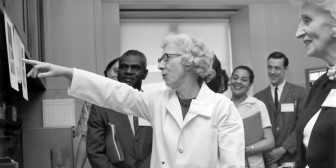
Throughout history, societies and civilizations rose and fell based on the quality of their top minds. Every major advancement came from the insights of experts who were funded, supported, and endorsed by governments and society at large. However, what happens when great minds lose the trust of the people?
It’s not ideal and brings an air of pessimism, confusion, and division among people. The distrust can also affect several aspects of society to the point that people only trust their eyes and ears. Today, let’s explore the triggers that have caused such distrust, those who remain worthy of trust, and the overall impact of mainstream media.
The Pandemic Trigger
The most defining moment in the overall decline of trust in experts was shortly after the COVID-19 pandemic. The fact that experts were revising conclusions about what was happening and what needed to be done on a weekly basis was a major factor. They would see established sources like the World Health Organization held views on masking. However, the next week, a senior doctor with decades of experience would put forth a differing opinion on live TV.
This drama would extend to various aspects of the pandemic, such as the effectiveness of vaccines, their side effects, and more. Somewhere along the way, the conversation became political, sides started to get drawn, and many felt like expert insights weren’t all that reliable after all.
While 76% of the public still trusts scientists either a ‘great deal’ or a ‘fair amount,’ the number is 11% lower than before 2020. Some would bring up politics and point out that this distrust typically skews republican. However, this wasn’t always the case.
Back in the 1970s, republicans trusted science more than democrats. As historians Naomi Oreskes and Erik M. Conway note, this was the era when the military-industrial complex was associated with the scientific establishment.
So, while Americans have had periods of distrust in scientists and experts, the pandemic was a major trigger point for the current generation.
Expert’s Confidence in Their Insights Doesn’t Always Reflect Reality
Perhaps the most interesting risk with a loss of trust in experts is that it encourages less risk-taking in general. This can be felt in several areas of life. Take investing, for instance. People are flooded with insights about the economy from experts, only to see those predictions be wrong a few months later.
Sometimes, people wonder if a recession is on the way and see vastly different, yet high-confidence statements from six separate so-called experts. Other times, people want to invest and might have questions like “Is the bear market dead?”
While many would boldly say yes, some experts like ValueTrend note that that wouldn’t be entirely true. They may be shorter and more violent, but they will still exist. It’s a realistic perspective that people need to hear, but many think tanks tend to favor statements of almost polarizing confidence.
It’s like people aren’t okay with admitting that there are some things we just can’t be sure of. The public picks up on such things, and it’s yet another factor that drops trust. The same can be said about this entire premise of trust in experts.
It’s easy to paint a picture that this decline is happening everywhere. However, as the Annenberg Public Policy Center survey shows, there are still some expert figures who haven’t seen trust declines. For instance, confidence in personal doctors, nurses, and primary health care providers has thankfully stayed high at a steady 86%.
A Dearth of Credible Information Sources
Whatever sense of trust that could remain also went out the window with the slow death of reliable news and media. Despite the idea of the general population being oblivious to things being popular, people aren’t that blind these days. They can clearly see how partisan almost every news company has become.
They notice how the media are often the mouthpiece for an agenda, and notice how experts lend their names to thinly veiled propaganda. Is it propaganda? It is cloudy water that no one can really see through. As you can imagine, this is why trust in the media has hit rock bottom in recent years.
As one report by Gallup shows, the biggest loss of faith is with the media. In 2025, confidence dropped to a record low of 28%, with only 8% of Republicans trusting the media now. Likewise, only 27% of independents believe the news, with Democrats being the ones who believe the media the most at 51%.
That’s a significant amount of distrust from people of all political affiliations. If you can’t trust key sources of information, it just makes everything else so much harder to believe.
Frequently Asked Questions
1. How does social media influence trust in experts and institutions?
Social media gives people access to more viewpoints than ever before, but it also makes it harder to separate credible information from speculation. Algorithms often promote content that generates strong reactions, which can amplify controversial opinions and cause users to question traditional experts and institutions.
2. Why do different experts often reach different conclusions?
Experts may examine the same issue but prioritize different data, assumptions, or methods. In fields involving uncertainty, reasonable professionals can interpret evidence differently. New information can also change conclusions over time, which is why expert opinions sometimes appear inconsistent to the public.
3. How does political polarization affect trust in experts?
Political polarization can lead people to judge experts based on perceived political affiliations rather than expertise alone. When scientific, economic, or social issues become linked to political identities, individuals may trust experts who support their views while dismissing those who do not.
Key Numbers & Facts at a Glance
Percentage of the public who still trust scientists | 76% vote “a great deal” or “a fair amount” |
Confidence in doctors, nurses, and primary healthcare providers | Stayed high at 86% |
Trust in the media by Democrats | 51% |
Trust in the media by Independents | 27% |
Trust in the media by Republicans | 8% |
All things considered, trust is a fickle thing and hard to earn back. Even if you gut and replace public thinktank organizations with a new set of experts, it’s still a long shot. The last decade or two has honed people’s ability to see agendas and propaganda. Hence, any effort at trust rebuilding will have to be 100% genuine.
At the same time, it’s useful to see that the skepticism doesn’t apply to all sources. So, while many don’t trust medical figureheads today, they still trust their own doctors, as discussed earlier. That should tell you that people aren’t just blindly hating for the sake of it.
Danielle Ferguson covers media and social trends.
View Comments
News from around the world