Coal Continues to Grow
Coal is still king

Jack Dini , Bio and Archives--September 27, 2024
Global Warming-Energy-Environment | Comments | Reader Friendly | Subscribe | Email Us
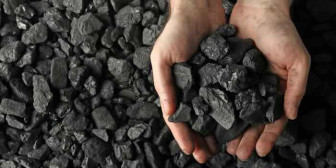
In 2023 the world burned more fossil fuel than at any other time in history. (1)
Here are some facts:
- Global energy related CO2 emissions increased by 1.7%, driven by China and India.
- Fossil fuel consumption in 2023 reached a record high, rising by 1.5%.
- China is by far the world’s largest consumer of primary energy, burning 34% of world consumption.
- Almost no country is meeting their UN anti-fossil targets. (1)
The US still consumes 82% of energy from fossil fuels in 2023—despite hundreds of billions spent by Biden-Harris.
US primary energy consumption by energy source in 2023 (1)
- Fossil fuel--82%
- Nuclear--9%
- Biomass--5.3%
- Wind--1.5%
- Solar--1.0%
- Hydroelectric--0.9
- Geothermal--0.1%
At the COP26 climate summit, a total of 46 countries signed the Global Coal to Clean Power Transition statement promising to accelerate a transition away from unabated coal power generation and cease issuance of new permits for new unabated coal fired power generation projects.
But less than a year later, all those promises went to the dogs, with dozens of countries scrambling to resume coal-based energy generation after the Ukraine crisis triggered a global energy meltdown. (2)
The Asia Pacific region is responsible for 81% of the world’s coal consumption, as well as the vast majority of the world’s ongoing carbon dioxide emissions.
Coal consumption in China was 50.5 percent of worldwide usage. India was second with 11.2 percent and the United States third with 6.6 percent. The rest of the countries were 3 percent or less.
China
China has yet to see its carbon dioxide emissions peak as it is a developing nation and has a massive population. (3)
China burns four times as much coal as India, the second largest burner in the world. Everyone else is an also-ran in the coal stakes. For every ton the US consumes, China consumes 12 times as much. (4)
China shows no intention of putting the brakes on the coal train. Around the world, 95% of all new coal power plants built in 2023 were built in China.
This message comes from the country’s National Energy Administration (NEA) in response to speculation that China had achieved peak emissions before its own deadline.
“We should not forget that China is still a developing country, pursuing modernization for a huge population,” the head of law and institutional reform at the NEA, Song Wen, told media. “Great efforts are still needed to achieve the goals of peak carbon and carbon neutrality,” Song also said. (3)
On the plus side, Beijing is working to change this. Earlier this month media reported that the country planned to build 11 new nuclear reactors to boost the share of zero emission electricity in its energy mix.
China is building more nuclear power plants than any other country in the world, just like coal power plants, and based on those record approvals, it plans to build even more, becoming the world’s biggest nuclear generator by 2030.
There are 26 nuclear reactors under construction in the country, set to add over 30 GW in generation capacity to the country’s total when completed. (3)
India
Nationwide fossil fuels generate more than 70% of India’s electricity and have been doing so for decades. (5)
In India this year’s survey, like those in previous years, clearly indicates that the country will neither reduce its consumption of coal nor back away from its commitment to the economic development that require affordable and plentiful energy for hundreds of millions of people. (6)
Coal dominates India’s energy landscape, comprising over 55 percent of the nation’s primary commercial supply. In the power sector, coal’s role is even more pronounced, with coal fired plants generating approximately 70 percent of India’s electricity.
With the country’s energy demand projected to at least double by 2047, it is clear that coal will remain the backbone of India’s mix for an extended period.
India has embarked on a massive effort to upgrade coal infrastructure and increase production. The country has coal reserves sufficient to last for the next 100 years. Coal is set to become the largest source of the country’s energy generation by 2040. (7)
Germany
German Chancellor Olaf Scholz’s green coalition gave the green light to restart 27 coal fired power plants until March 2024. This is quite a turnaround for the country that shunned all fossil fuels for the last three decades, shutting down its nuclear plants after the Fukushima incident as well as its coal and natural gas plants for their high carbon footprints. (8)
Summary
There is no stopping coal in the near future. Most of it is being used by China, India and many developing countries. Even the US, which has seen many cold-fired plants shut down, still relies on coal for 82% of its energy.
References
- Marc Morano, “Epic fail: there is no progress on climate,” climatedepot.com, August 31, 2024
- Alex Kimani, “ China has approved more than 50 gigawatts of new coal power,” oilprice.com, August 8, 2023
- Charles Kennedy, “China shuts down speculation that it has reached peak emissions”, zerohedge.com, August 30, 2024
- Jo Nova, “China is the coal furnace of the world and everyone is fine with that”, July 9, 2024
- Sibi Arasu and Mary Katherine Wildeman, “Clean energy gains a foothold in India, but coal still rules,” apnews.com, January 23, 2023
- Vijay Jayaraj, “India to increase use of coal despite climate fearmongering,”, principia-scientific.org, August 28, 2024
- Tsvetana Paraskova, “India’s new coal power capacity is set to soar in 2024,” oilpricee.com, June 19, 2024
- Gosselin, “Surprise: coal became the most important energy source for electricity in Germany in 2022,” notrickszone.com, March 14, 2023
View Comments
John William Dini, know to all as ‘Jack’, passed away at the age of 89 on June 17, 2026. He was born in Cleveland, Ohio on Nov. 14, 1936.
He published two books, a technical book on materials science and coatings and another on environmental issues. In retirement, he wrote extensively on various environmental issues for online publications.
He was a skilled leaded glass hobbyist, creating more than 20 lamps and many panels. He was a jogger for many years, competing in over 300 long distance races. He was a slow runner, not wanting to take the glory away from others. His secret was to start slow and taper. He and Anne traveled extensively, visiting over 70 countries.
He is survived by his wife, Anne, of 67 years, and sons Mike, Steve, and Paul. If you were to meet him somewhere, he would sum up his life as ‘peaches and cream’.