"Because high energy costs take a large bite out of many household budgets, families across Canada pay the price when government energy policies boost the cost of electricity," said Kenneth Green, the Fraser Institute's senior director of natural resource studies and co-author of Energy Costs and Canadian Households: How Much Are We Spending?
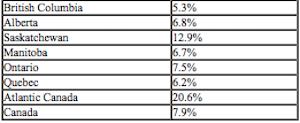
For example, in 2013 (the latest year of comparable data), 7.9 per cent of Canadian households were living in energy poverty, which means energy (electricity and home-heating bills) consumed 10 per cent or more of household expenditures. This percentage is up from 7.2 per cent in 2010 (the earliest year of comparable data).
Between 2010 and 2013, energy poverty was on the rise in most provinces.
In 2013, Atlantic Canada had the highest incidence of energy poverty (20.6 per cent of households), British Columbia had the lowest (5.3 per cent). Alberta's incidence of energy poverty (6.8 per cent) ranked in the middle of Canadian regions.
Ontario, where the province's Green Energy Act has increased electricity prices, had the third highest incidence of energy poverty (7.5 per cent of households) in Canada.
"Government policies that raise electricity prices may push some families into energy poverty and further stretch the household budgets of families already in energy poverty," said Taylor Jackson, study co-author and policy analyst at the Fraser Institute.
The study also found that energy poverty disproportionately affected lower-income Canadian households, particularly households making $47,700 or less per year.
"Lower income households are more vulnerable to the negative effects of rising energy costs-something policymakers should consider when devising energy policy," Green said.
Energy poverty by jurisdiction in 2013 (per cent of households)