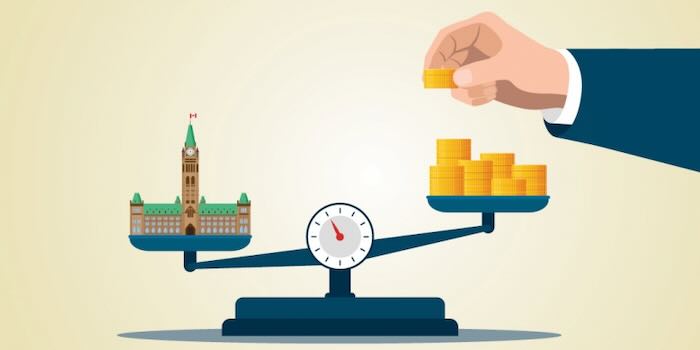
The study, which examines different alternatives the federal government could take to achieve a balanced budget, finds that it is indeed possible within just one or two years with modest spending restraint. For instance, slowing the growth in nominal program spending to 0.3 per cent would result in a balanced budget by 2026/27. Alternatively, a reduction in nominal program spending of 4.3 per cent would balance the budget in 2025/26.
Prior to the COVID pandemic, federal spending increased faster than population and inflation—and these spending increases have resulted in a string of large budget deficits that have contributed to an estimated $941.9 billion increase in gross federal debt from 2014/15 to 2023/24.
“This accumulation of debt, along with recent hikes in interest rates, has raised the cost of interest on the federal debt to one of the largest budget expense items,” said Fuss.
“The federal government should prioritize balancing the budget so taxpayers aren’t saddled with future tax increases to pay ever-increasing interest on federal debt, there are options—now it’s just a question of whether they have the good sense to use them.”
Media Contact:
Jake Fuss, Director, Fiscal Studies, Fraser Institute
Grady Munro, Policy Analyst, Fraser Institute
To arrange media interviews or for more information, please contact:
Drue MacPherson, Fraser Institute
604-688-0221 ext. 721
drue.macpherson@fraserinstitute.org