

Grover Norquist is No ‘Useful Idiot’
Grover Norquist is no idiot. He certainly has been useful to America’s enemies, though, and evidently thinks the rest of us are sufficiently idiotic not to recognize deliberate dissembling when we see it.
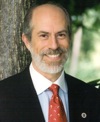
In the course of an uncomfortable hour-long television interview with Grover Norquist yesterday, radio and TV talk show host Glenn Beck established a number of things. The most surprising is that the libertarian activist best known for his anti-tax campaigns would rather be perceived as what influence operators call a “useful idiot” – an individual unwittingly duped into helping hostile forces – than as an “agent of influence” for those forces. As Bill Clinton used to say, “That dawg won’t hunt.”
No one who knows Grover Norquist would believe that this Harvard MBA with decades of experience running sophisticated and impactful political and lobbying campaigns at the highest levels of official Washington is an idiot, useful or otherwise. Certainly, he is too smart to have been taken for a ride by relative newcomers to the business, namely Muslim Brotherhood-associated operatives. (As pollster John Zogby recounted in 2001: “[Norquist has] played the role of interlocutor. With all respect, many of the [Muslim] leaders are immigrants and don’t have years and years of experience. Grover has filled that void.”
Mr. Beck afforded Norquist an opportunity to respond to evidence amassed over the past fifteen years by an array of investigative journalists and national security practitioners. Norquist’s responses were a mish-mosh of filibustering non-answers, deflections, ad hominem attacks, improbable defenses and outright deceptions.
A few examples suffice to call into question Norquist’s latest claims:
- Who are Grover Norquist’s “Muslim leaders”? Beck drilled down on Norquist’s ties to a succession of individuals associated with the Muslim Brotherhood with whom he has made common cause over the years. In response, Norquist suggested that he did not know, scarcely interacted with or was oblivious to the true nature of such “Muslim leaders” – especially two who subsequently went to prison on terrorism charges: Abrurahman Alamoudi and Sami al-Arian. Like Claude Raines in “Casablanca,” he risibly professes to have been shocked, shocked to have only belatedly discovered their true jihadist nature.
That would only have been possible if he deliberately worked not to know. After all, long before Alamoudi and al-Arian were arrested and convicted, it was common knowledge that both were deeply problematic Islamic supremacists. David Horowitz’s “Discover the Networks” website notes:
- In 1994, [Alamoudi] said: “Hamas is not a terrorist group.... I have followed the good work of Hamas.”
- In March 1996, Alamoudi said he was “honored to be a member of the committee that is defending” Islamic Association for Palestine (IAP) founder Musa Abu Marzook, who in 1997 would be deported from the U.S. because of his Hamas-related activities. “I really consider him to be from among the best people in the Islamic movement,” Alamoudi added. “Hamas ... and I work together with him.”
- In December 1996, Alamoudi told a meeting of the IAP: “I think if we were outside this country, we can say, ‘Oh, Allah, destroy America,’ but once we are here, our mission in this country is to change it.... You can be violent anywhere else but in America.”
- Norquist and the Islamic Institute: Beck grilled Grover Norquist about the organization he started in 1998 with help from Abdurahman Alamoudi, the Islamic Free Market Institute (better known as the Islamic Institute). Norquist made a series of implausible and tortured explanations for the role of this organization – a Muslim Brotherhood influence operation set up inside his offices – and that of the man hired to establish and run it, Khaled Saffuri.
- In October 2000, the Islamic Institute’s co-sponsored, along with a number of other Muslim Brotherhood-tied organizations, an anti-Israel demonstration in Lafayette Square. On that occasion, Alamoudi declared his support for Hamas and Hezbollah. In response to Mr. Beck’s questions about this event, Norquist preposterously blamed the Institute’s sponsorship on the unauthorized say-so of “an intern.”
- Grover Norquist’s involvement with the Islamic Institute gave Muslim Brotherhood-tied individuals access to the Bush campaign (e.g., Khaled Saffuri’s appointment as Muslim outreach coordinator for the George W. Bush 2000 campaign). And, after the election, it helped place others in government positions (e.g., Suhail Khan at the White House and Transportation Department and Faisal Gill in the Department of Homeland Security).
- The Institute also was instrumental in promoting the agenda of Muslim Brotherhood leader, Sami al-Arian, aimed at denying prosecutors the ability to protect classified information in deportation proceedings.
- Grover Norquist “Champion of the Abolishment of Secret Evidence Movement”: Glenn Beck probed Norquist’s work on behalf of al-Arian’s bid to prohibit so-called “secret evidence.” Norquist repeatedly insisted that his interest in repealing the authorization for the use of such evidence had nothing to do with al-Arian. He claimed instead to have been inspired to do so by former Director of Central Intelligence James Woolsey.
- Khaled Saffuri and the Muslim Brotherhood: Beck challenged Norquist several times about hiring Alamoudi’s “right-hand man” to run the Islamic Free Market Institute. Norquist implausibly responded that: Saffuri did not like Alamoudi “who looked back” (translation: Alamoudi was a shariah-adherent and -promoting Islamist) and, even though he worked under that Muslim Brother (and al Qaeda financier) for many years, he did not share Alamoudi’s Islamic supremacist views. He asserted that Saffuri alone was responsible for taking $20,000 from Alamoudi for the Islamic Institute and that Saffuri was ignorant of his boss’ jihadism until Alamoudi’s outburst at the October 2000 demonstration. These are preposterous claims.
Read next: How Useful Is Gold
Email Us | Reader Friendly | Comments
Frank Gaffney Jr.——Bio and Archives
Frank J. Gaffney, Jr. is the President of the Center for Security Policy and a columnist for the Washington Times.