How To Know You're In A Good Place In The Heartland
Survival in Tough Times: In hard times or easy times, it’s good to know where there’s a nearby country store
Dr. Bruce Smith , Bio and Archives--January 26, 2025
HeartlandLifestyles | Comments | Reader Friendly | Subscribe | Email Us

America has always been a haven for those suffering religious persecution in Europe. With the beginning of the Protestant Reformation in 1517, unrest soon spread across much of Europe bringing an era of religious wars. One of the largest of these was the German Peasants’ Revolt of 1524-25. Several Anabaptist groups (Anabaptists do not believe in child baptism) including the German Baptists, the Dunkers, the Schwenkfelters, the Mennonites, and the Amish had their origins in that traumatic time and migrated to safer areas.
Some eventually came to the United States to continue their communities. Since then the growth of Amish and Mennonite groups and their spread across the heartland has been a blessing for all of us. Where one finds Amish and Mennonite (and Seventh-Day Adventist) groups scattered across the Heartland there are often country stores to be found. They don’t do much advertising. You might need to ask around.
These stores cater to members of their own communities, but they welcome everyone. They are not all alike. Inside you will find a variety of wholesome foods and products, kitchen ware, toys, reading materials, Tupperware, usually a deli counter, baked goods, jams and jellies, popcorn, freezer and cooler aisles, and fresh produce in season. Every time I go in my favorite store I find something I wasn’t expecting.
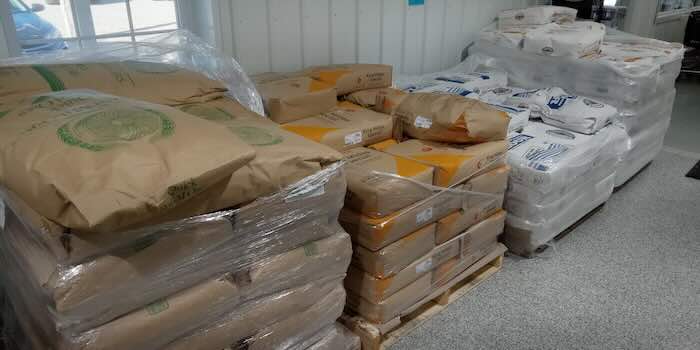
Each country store is a combination of modern convenience and old fashioned living. There are always utensils, knives, and colanders. There are dish cloths, spatulas, and canning jars. There are bagged foods of every kind and description from buckwheat flour to salt to tapioca to brown sugar to spices. If you’re into buying bulk, the nearest country store is worth a visit. Here you can see fifty pound bags of rolled oats and flour. The far pallet in the photo is Prairie Gold flour from Montana. That’s the good stuff.
The stores and their owners are models of thrift and clean living. They believe in solid nutrition and the virtues of country life. I’ve never been in one that wasn’t spotless.
When you have the opportunity to go out across our beautiful Heartland, whether on a run to a nearby town or visiting friends and relatives, keep an eye out for country stores. Look for grain elevators rising high above the landscape. Look for dairy farms where there are also horses. A corncrib with ear corn in it is a dead giveaway. Plain white houses where clotheslines hang heavy with colorful work clothes the year around are another indicator. When there are buggy traffic signs along the road or when there’s a track near the middle of each lane of a state highway made by horses’ hooves, be mindful of your speed and swing wide when you go around respectfully. In the warm weather you may spot a plowboy nodding atop a sulky plow while the big Belgians make breaking a furrow look easy. In July there are sometimes sheaves of wheat stacked in a field to dry before going to the thresher. That’s an old school sight from way back
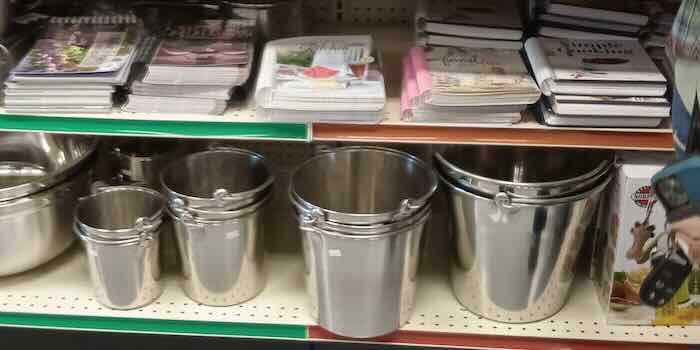
When you go inside one of these stores and see a variety of sizes of stainless steel milk buckets, then you’ll know for sure that you’ve found a good store run by good people in a good place. When you find one, thank your lucky stars that we live in a country where people who are different can live in harmony among others who are different in their own ways.
If you haven’t been to a country store for a while, it’s time.
View Comments
Dr. Bruce Smith (Inkwell, Hearth and Plow) is a retired professor of history and a lifelong observer of politics and world events. He holds degrees from Indiana University and the University of Notre Dame. In addition to writing, he works as a caretaker and handyman. His non-fiction book The War Comes to Plum Street, about daily life in the 1930s and during World War II, may be ordered from Indiana University Press.