HB 71 was “plainly religious in nature” and was “unconstitutional in every application”
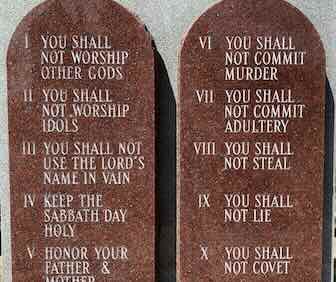
In July, the state had agreed to pause implementing House Bill 71 after a multifaith group of parents, represented by the ACLU, the Freedom From Religion Foundation, and Americans United for Separation of Church and State, sued the state claiming the law endorsed a specific religion and discriminated against non-Christian students. However, state officials will “immediately appeal” the decision citing that the Ten Commandments law is meant to teach students about the nation’s history, culture, and tradition where recent Supreme Court precedent favoring “historical practices and understandings” would seem to permit such expression.
In blocking the law, U.S. District Judge John W. deGravelles issued a 177-page ruling in Darcy Roake et al. v. Cade Brumley et al stating HB 71 was “plainly religious in nature” and was “unconstitutional in every application.” The judge went as far to state the law actually fails to comply with current precedent because he did not see enough “convincing evidence” the Decalogue was a significant part of the state’s history to mandate it into public education.
Louisiana officials defended the Ten Commandments law as constitutionally valid by arguing that it has a historical and educational purpose. They cite the Decalogue’s “historical role” in developing American law and education, which displayed alongside other historical documents, would be permissible under the First Amendment. Since HB 71 also required public school classrooms to display the Mayflower Compact, the Declaration of Independence, and the Northwest Ordinance, the state's legal team argued that the law’s intent is not to endorse a religion but to teach where America’s longstanding moral values in civic life originate.