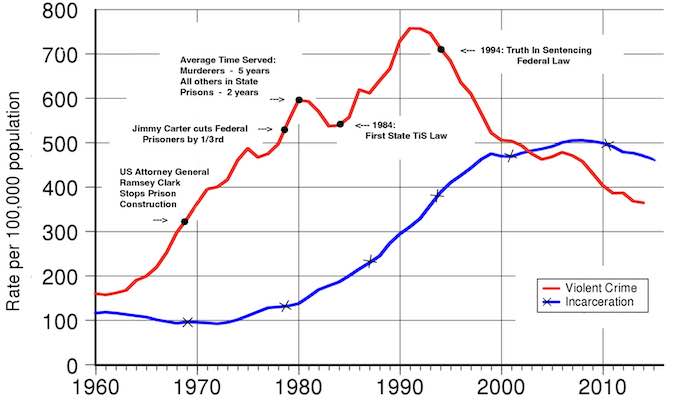
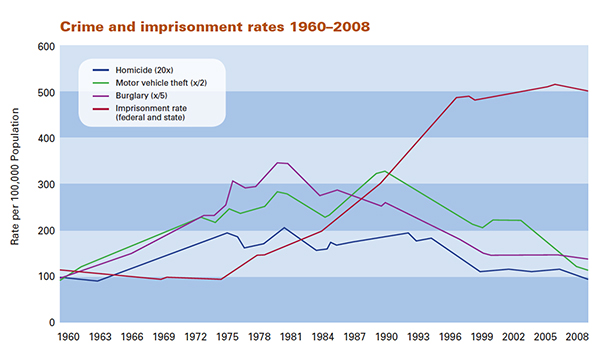
The damage was so complete that by the mid-1970s, violent crime had tripled
In fact many of these leniencies became legal mandates, imposed by activist courts." Time Magazine Vol. 100, Issue 4, reports a Wisconsin governor task force’s call to close all prisons, with a federal judge and law professor agreeing. Anti-prison crusader US Attorney General Ramsey Clark, a fixture of the Kennedy/Johnson administrations, blamed society totally; “our inhumanity," and “the sins of generations of selfish neglect.” When the line is crossed, Clark lists 28 reasons why the fountainhead is not the actual criminals. Clark called prisons schools for crime, hothouses that only exacerbate problems and counterproductive. In his 1970 book ‘Crime in America’, Clark says jails manufacture criminals, and imperfect criminal justice is a greater danger than the outlaws. Clark stopped prison construction as all crime categories soared.
The damage was so complete that by the mid-1970s, violent crime had tripled, but incarceration numbers were lower than in 1960. Arrests, convictions, sentencing, and time served continued falling into the 1970s. (Latzer, ‘The Rise and Fall of Violent Crime in America’) In effect, few were going to prison. The universal saying was, ‘The criminals were back on the street before the police could fill out the paperwork.’ The Brennan Center’s ‘History of Mass Incarceration’ explains the crime explosion this way: nothing happened—the 1960s are not mentioned. Same with the Vera Institute’s ‘Causes of Mass Incarceration’, nothing about crime. To talk about incarceration without crime is illogical, but progressives do it all the time. Jimmy Carter did his part; he cut the federal prison population by 34%. With insanity at its zenith by 1980, the real-world maximum prison sentence was five years. The actual time served for murderers was five years; in state prisons, the average actual time served was two years. Criminals did short hitches and hit the streets again.