October in Gold
Survival in Tough Times: On many of these days I have gone back in my memory to sit on the firm seat on a yellow school bus on a golden October day, and always by the window, partway back;
Dr. Bruce Smith , Bio and Archives--October 19, 2025
HeartlandLifestyles | Comments | Reader Friendly | Subscribe | Email Us
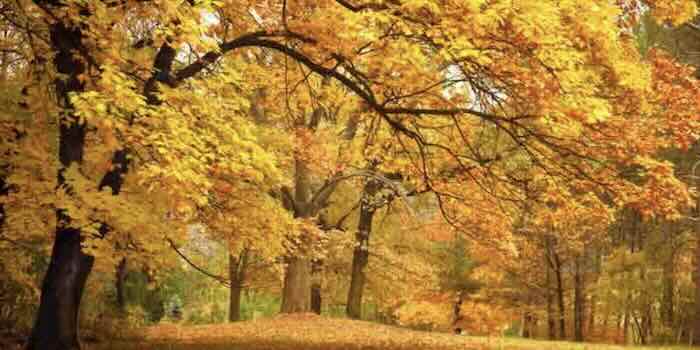
There has never been a time when I didn’t love the fall of the year. Never liking the Heartland summer heat, it was always a relief to breathe the crisp air flowing down from the True North in Canada and kick crisp leaves where they accumulated in the yard.
When I began elementary school in earnest after the first grade in an urban school, riding a school bus became a daily routine that lasted for eight straight years. Riding the bus was both good and bad. In the morning I dreaded its arrival in front of our house because it signaled the beginning of the day’s regimentation and rules. In the afternoon it was the ticket home, another day’s school drudgery just another fading memory.
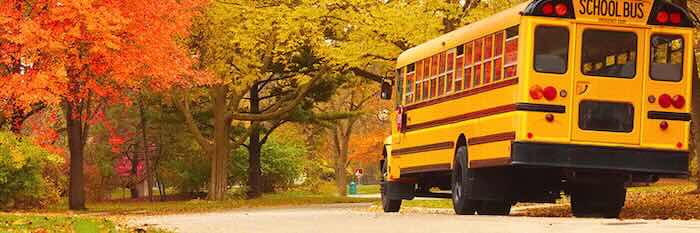
As a little kid it was often scary. Bigger kids through 6th grade rode my bus to the same school. They always sat in the back. Because I didn’t want to get beaten up or humiliated by some ape that weighed twice or more what I did, I avoided those back rows. As I became older it was possible to sit a bit further back, but only the oldest kids sat in the very back. The driver could look above his head and see all of us in the big rear view mirror. He looked us over frequently unless we were sleepy or quiet, then he just kept his eyes on the road.
There was a rule about no fighting on the bus, of course, and it was enforced. Every bus driver I ever had looked like he could pick anyone up by the front of the shirt and shake them like a rag baby. Once a kid opened the emergency door in the back without anything like a good excuse. The driver slammed on the brakes and came storming back along the aisle with steam escaping his collar and fire in his eye. Nobody did that again. We generally didn’t test our luck with any of the rules. Some kids would observe the rule on the bus, but when outside at home it was another matter. I was in about the fifth grade when I saw twin brothers step off the bus one day, and then dive into the dirt and gravel at the end of their driveway in a real donnybrook, swinging fists and making plenty of contact. As we drove away they were still at it, pounding each other with considerable hostility in their cloud of dust until they were out of sight behind us. We looked at each other, glad to have missed being in the middle of that one. I never heard what the fight was about. Probably a girl. When it was over I’ll bet at least one of them thought it was worth it. If it was about a girl, she’d be around 70 now. The twin boys, if they both survived the fight, would be about the same age. Not long after the fight they moved away, never to be heard from (by us) again.
My perspective on brilliant fall weather came from riding that bus through the elementary years. The air might be crisp and cool, but school buses were always warm. Our bodies provided most of the heat on chilly days, but every afternoon on sunny days the buses sat lined up along the school drive, soaking up plenty of afternoon heat. Never did I ride in an air conditioned school bus.
Riding the gold colored school buses left an indelible picture in my memory, half real but with another half filled in with gauzy impressions. One year it was the hunchbacked older GMC bus with the worn seats and the mechanical linkage that the driver used to extend the stop sign out the side of the bus so traffic would halt. After that year we had the newer buses with the electric sign extender. We glided along badly paved roads and sometimes even on gravel lanes. That made for grit in one’s teeth if sitting in the back rows of seats. We passed along the quiet roads to pause at each stop as though we were on paddle boats, arriving and departing at the same elevation above the road. One year we came right down Grimes road that met the highway in front of our school, Indiana 227, just opposite the entry drive. In my memory that road is always thick with beautiful pale gold foliage most likely from sugar maples. Near the highway there was an apple tree hanging with beautiful golden apples the same color as the maple leaves. On a road of that name I figured the tree was a Grimes golden, or at least I thought it would be good if it were true.
Almost every one of the five years I rode the bus to Riley Elementary we came rolling down 13th Street to where it joined Indiana 227. The last few hundred yards was along the side of St. Mary’s Cemetery. Trees overhung the road there leaving a gold and red carpet for the bus to travel both directions. If it had been rainy the big tires made squishy noises, but I remember that it was always dry, so the leaves were crisp, blowing across the road as we passed over them. One year along a jog in that road we stopped every morning and afternoon at Cozad’s grocery. It was a neighborhood store in a poor area. Kids walked a ways to come up to the road where the store sat. It always seemed dusty there on the hot afternoons. The store had screen doors painted with the Cardinal bread logo, so no air conditioning. There was a redbird with the words Cardinal bread above and below it. We could hear the screen door slap shut when kids went in there after stepping off the bus.
What delights must have been hidden inside! There would have been candy and popsicles and red ropes and wonderful cold soft drinks. I wondered if they had my favorite cream soda in the clear bottle with the quaker in the glass and the pale blue bottle cap. That same bottling company made yummy orange and root beer, too. Seven-Up was in the cooler inside, I’d guess. You could get a loaf of bread and probably baloney and Vienna sausages in the can from Hormel. There would have to be cigarettes, too, but those never appealed to me. Then we’d drive away. I never went in that store.
The school yard was blessed with tall sugar maple trees which always gave us a crunchy sea of gold and red out around the flagpole. Other maples graced the open area to the east in front of the new addition to the school. Next door was the old red brick Riley School of just one or two rooms, built in the early part of the 20th century or even earlier, but no longer a school. That building gave us perspective on our growing, improving world. These heady days of the early 1960s we needed bigger, more modern brick schools with gyms and cafeterias and room for waiting buses. Our building dated from the 1940s with the addition of new rooms in the 1950s. My baby boom cohort needed lots of room. It was common in those years for elementary classes to have thirty or more students in a room. I was in a room of 38 one year. Another room that same school year had 42. It was the ‘good old days’ in a way. Only one teacher, without any help from an aide, managed each of those rooms. We thought nothing of it.
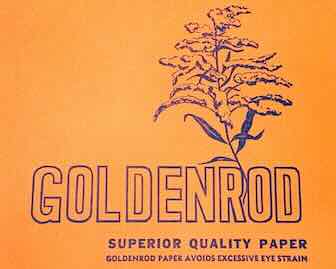
Inside our classrooms there was more gold. Part of our list of supplies provided from home was the usual erasers, pencils, watercolors, etc., but there was always a required Goldenrod tablet. This was soft golden lined paper in a tear-off pad that we were to use to do all manner of writing work. It had an orange and brown cover with a goldenrod flower dancing on it that always seemed just right for starting school in the fall. We all had one and mostly used them up as I recall in the course of the year. We took spelling tests on them and wrote the horrid Palmer handwriting exercises we were given. There were book reports and other assignments, but always they were on the beautiful gold paper. It seemed like about everyone had gold pencils. One year I had a gold ball point pen my dad had brought me from the real estate office where he worked. Another kid stole it but I spotted it in his desk and I got it back. The blighter had scraped off the information about the real estate office thinking no one would recognize it, but I did.
When it came to 4th grade, we were finally allowed to have sharp pointed scissors. This was a big step up for me. Those blunt nosed scissors were for little kids, tykes really. They were just embarrassing to have in a pencil bag. All that changed with the 4th grade. I was given a pair of Eversharp 4 inch scissors that were wicked sharp and cut perfectly even into tiny corners. It must have been the year we made beautiful snowflakes out of folded paper. White with glitter on them and hanging in the window we imagined they were actually real snowflakes the way you’d see them up close with a magnifying glass. I guarded my wonderful scissors carefully to make sure that same kid didn’t swipe them like he had my pen. I guarded them so well that I still have them to this day. They are a prized possession.
Some school years weren’t too bad. Geography was always really interesting, and the readers usually had good stories. I always wanted to read ahead. My mom came to school one time, maybe in the second or third grade. I got called on to read, which went pretty well, as I recall. I had no inkling that I would one day be a classroom teacher myself, and never dreamed that I would be a college professor, too. For those days, it was enough to get through the year trying not to be completely miserable all of each day. Some days chickens, some days feathers.
Still, in my memory, the dominant hue was gold. Goldenrod grew beside the roads and in the corners of cornfields. Black eyed Susans with their rich golden petals and deep brown centers nodded as we walked by. Apples and the leaves of trees, weary of holding them up for another year beamed gold at me, too. There were my favorite angle wing butterflies with their fuzzy rich golden brown wings and the little blue question marks hiding below. Bright yellow sulphur butterflies and dogfaces flitted across the fields. Rich golden monarchs and viceroys were common, too. It seemed that we had more than our share of blonde and red-headed girls. They were mysterious and interesting in a strange kind of way. Really interesting, but usually smarter than us boys, but I could hit a ball further than any of them, except maybe for Margaret. There was a real puzzler. She was smart as a whip but nice, too. That’s another one who moved away.
I have vowed to notice and enjoy every October day this year and we are past halfway now. So far so good. On many of these days I have gone back in my memory to sit on the firm seat on a yellow school bus on a golden October day, and always by the window, partway back.
View Comments
Dr. Bruce Smith (Inkwell, Hearth and Plow) is a retired professor of history and a lifelong observer of politics and world events. He holds degrees from Indiana University and the University of Notre Dame. In addition to writing, he works as a caretaker and handyman. His non-fiction book The War Comes to Plum Street, about daily life in the 1930s and during World War II, may be ordered from Indiana University Press.