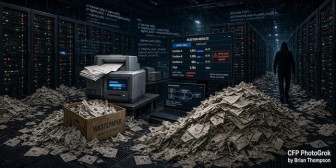
Today, in every state, ballot forms are scanned electronically
Besides the creation of voter databases, a second change that has greatly assisted fraud is the transition from hard copy records to electronic records. Prior to 1990, most elections were conducted using paper ballots that the voters marked and submitted in person. When the polls closed, those ballots were counted by hand and the totals recorded on paper forms. The paper poll pads gave accurate counts of the number of voters who came to vote, and the total had to match the number of ballots. Counts of voter selections could be verified by independent recounts, and any discrepancies would show up quickly. Audits were relatively simple. All that is gone, too. California, and other states even made it illegal to hand count ballots.
Today, in every state, ballot forms are scanned electronically, the voter selections are identified by electronic inspection of the scan images, and vote totals added by software tally programs in electronic tally computers. Every step of this process happens out of sight of any human observer, every step is vulnerable to manipulation, and every step is independent of the actual voter choices indicated on their ballot. That paper ballot is now just so much wastepaper.
All the machines that perform the scans, tally the choices, and accumulate the results are just software controlled computers that do what the software tells them to do. Supposedly, that software is carefully inspected, tested, and certified as honest and reliable. And yes, that software might be accurate, but there is actually no guarantee that the software that was certified is actually the software running on the machines.
Some will say that there are hundreds of thousands of machines in use, and it would be impossible for someone to change the software on all of them, or even enough of them to make a difference, and besides, chain of custody logs would show that they were all properly updated in accordance with certification requirements. The trouble is that all those machines are obtained from only a handful of vendors who supply the software used to update those hundreds of thousands of machines. In addition, most of the software traces back to a few, or even a single source.