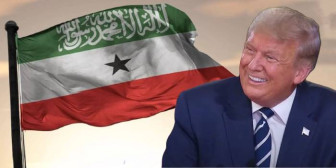
Somaliland, for all intents and purposes, is its own country
Speaking of borders, language, and culture, President Trump has another chance to make history: eliminate pirate forces, undermine Islamic fundamentalism, and establish his bona fides as a peace-maker, a deal-maker, and a nation-builder who doesn’t send young American men to die in pointless wars. This potential diplomatic measure wouldn’t cost him anything but a simple declaration.
President Trump, it’s time to recognize Somaliland as a separate, sovereign country from Somalia.
Somaliland, judging by the name, has close kinship with Somalia. The failed state, home to vile modern-day pirates who have waged war on tourists and shipping lanes alike, has stifled efforts for their northern neighbors to break away officially and obtain the rights reserved among all other nations in the world.
And yet, Somaliland, for all intents and purposes, is its own country.
First, some background.
Somaliland existed as a British protectorate until 1960, when it was granted freedom from the mother country. The French Somali region also won independence and became Djibouti. The Italians controlled the southern section of the Eastern Horn of Africa, which became a free Somalia following caretaker status under the United Nations. The former British and Italian dominions joined together in 1960, but Somaliland (in the northwestern section) was getting the short end of an already short stick under the dictatorship of Mohamed Siad Barre. Civil war broke out (and hasn’t ended!), and Somaliland broke away in 1991.
For over thirty years, Somaliland has existed as a quasi-independent state. They have their own government, currency, and military. Unlike their failed state neighbors, Somaliland has retained considerable order and stability. The country has enjoyed ethical elections and peaceful transitions of power. They have forged strong relationships with the United States and the United Kingdom. They are growing their relationships with other African states,including Ethiopia.