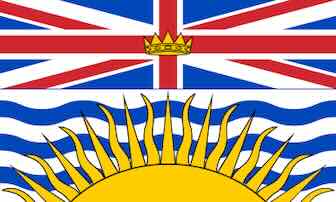
As we see this fundamental transformation taking place in B.C., and then heading eastward, I suspect that Canadians who do not want such a future for their country will start to ask themselves how we arrived at this point. How can a nation be fundamentally transformed with no input from the citizens? Don’t the Canadian people have to be consulted, as we watch our country being transformed by judicial fiat and tribal law? Doesn’t a constitutional process have to be invoked, as happened in the failed Meech Lake or Charlottetown Accords?
Most Canadians believe that history has not been kind to indigenous people, and that indigenous have legitimate claims that need to be addressed. But most Canadians also believe that Canada is one country, in which everyone should be equal.
Canadians also firmly believe that Canada should not be divided into racial enclaves, where different sets of laws are applied to different racial or ethnic groups. In fact, most Canadians would probably support the sub-title of the late Gordon Gibson book cited above: “Respect the Collective – Support the Individual”. Canadians want to see indigenous people succeed, and they support indigenous people in their fierce determination to hold on to their indigenous identity and culture. But they want indigenous people to succeed as Canadians – not in a Canada that has been carved up into racial ghettos, like slices of a cheap pizza.
The Haida agreement is the first highly visible slice – a symbol of a semi-independent “nation” within Canada, that will be governed by rights of the collective tribal law – as opposed to the rights of the individual. That takes us back thousands of years. Before the Haida agreement inspires hundreds of other such racial mini-states within Canada, should Canadians not have a say in what our country is becoming?
Or will we continue to let unelected judges, and faceless bureaucrats, determine our fate?
Brian Giesbrecht, retired judge, is a Senior Fellow at the Frontier Centre for Public Policy