Shortly thereafter, the High Court finally eliminated the “Lemon Test” in Kennedy v. Bremerton School District where Liberty Counsel argued in an amicus brief that the school could not suppress Coach Joe Kennedy’s private religious speech to silently pray on the football field after games. In Kennedy, the High Court replaced “Lemon” by returning to a traditional First Amendment standard where courts must interpret the Establishment Clause by “reference to historical practices and understandings.”
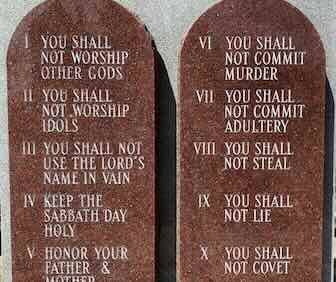
A resurgence of the Ten Commandments in schools is already underway. Louisiana recently became the first state to pass legislation that requires the Ten Commandments be displayed in all of its public-school classrooms. Even though a district court judge recently issued a temporary injunction blocking the law, the state will appeal setting up another potential Ten Commandments case for the Supreme Court. In addition, in June 2024, the Oklahoma public schools superintendent announced a directive for “all public schools to teach the Bible and the Ten Commandments.”
The Ten Commandments is obviously engrained in American law and government. With the High Court’s directive that the Establishment Clause interpretation should be based on “historical practices and understandings,” the legal landscape has significantly changed.
Liberty Counsel’s Founder and Chairman Mat Staver said, “The Ten Commandments have shaped American law and government. Now that Lemon v. Kurtzman has been overruled, displays of the Ten Commandments on government property are on solid legal footing.”