U.S. one of only three countries opposing UN resolution that restricts free speech in order to fight Nazis or something
That didn't take long

Dan Calabrese , Bio and Archives--August 27, 2017
American Politics, News | Comments | Reader Friendly | Subscribe | Email Us
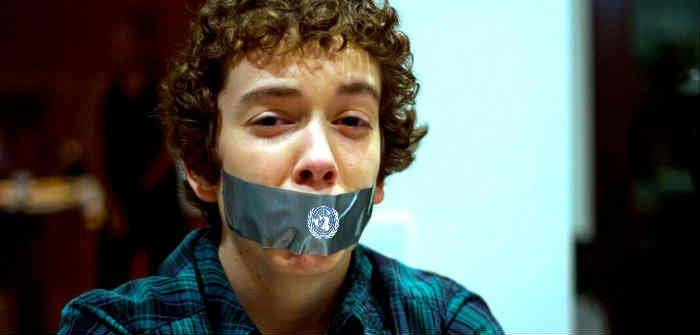
The resolution entitled "Combating glorification of Nazism, Neo-Nazism and other practices that contribute to fueling contemporary forms of racism, racial discrimination, xenophobia and related intolerance," was approved by the U.N.'s human rights committee on Friday with 131 in favor, 3 against with 48 abstentions. Ukraine and Palau were the other no votes. "We condemn without reservation all forms of religious and ethnic intolerance or hatred at home and around the world," said Deputy U.S. Representative to the Economic and Social Council Stefanie Amadeo, explaining the U.S. vote. "However, due to this resolution's overly narrow scope and politicized nature, and because it calls for unacceptable limits on the fundamental freedom of expression, the United States cannot support it," Amadeo said. She said the U.S. also disagrees with the resolution's willing to curb freedom of expression even while sharing its concerns about the rise of hate speech around the world. "This resolution's recommendations to limit freedom of expression, freedom of association, and the right to peaceful assembly contravene the principles enshrined in the Universal Declaration of Human Rights and must be opposed," Amadeo said.
If you read the entire resolution, you'll find that a lot of it sounds unobjectionable, but even those parts contain subtle contexts that wreak awfully strong of thought control. Where really get to the heart of the matter, though, is here:
Incitement to all forms of hatred, taking into account article 20, paragraph 2, of the International Covenant on Civil and Political Rights (ICCPR), and instances of racially motivated hate speech, including the dissemination of ideas of racial superiority or that incite racial hatred, taking into account article 4 of the International Convention on the Elimination of All Forms of Racial Discrimination, article 19 of the ICCPR and general comment No. 15 of the Committee on the Elimination of All Forms of Racial Discrimination, which states that the prohibition of the dissemination of all ideas based upon racial superiority or hatred is compatible with the freedom of opinion and expression;I must have missed the International Convention on the Elimination of all Forms of Racial Discrimination, but it appears they've done quite some work, including the assertion that you can ban the expression of every idea that sounds racist and still claim to be allowing free expression. The problem here is obvious enough: As soon as you accept that certain ideas are too horrific to allow the expression of them, you've now opened the door to let the authorities decide which other ideas are beyond the pale. Does it make you a hater to oppose gay marriage? Is it OK to ban that too? And if you explain that your opinion is based on the authority of the Bible, then maybe it becomes hate speech to call the Bible authoritative.
The UN can't force any country to adopt these policies
Oh no, you say, the ban would stop at certain ideas and only those ideas. Really? You sure about that? The was not a Security Council resolution, so the U.S. could not veto it. The resolution passed. But because it is not a Security Council resolution, it has no force behind it. The UN can't force any country to adopt these policies. Yet it appears most countries in the world are quite willing to do so, and is there any doubt in your mind that many American leftists would be just as willing? They're not really for free speech, and they never have been. They're for lots of secular, leftist speech, preferably government-subsidized, that everyone has to listen to. And agree with. Or else.View Comments
Dan Calabrese——Bio and Archives
Dan Calabrese’s column is distributed by HermanCain.com, which can be found at HermanCain
Follow all of Dan’s work, including his series of Christian spiritual warfare novels, by liking his page on Facebook.