Zinc and the Common Cold
Zinc appears to interfere with the replication of rhinoviruses, the microbes that cause the common cold

Jack Dini , Bio and Archives--March 10, 2020
Health and Medicine | Comments | Reader Friendly | Subscribe | Email Us
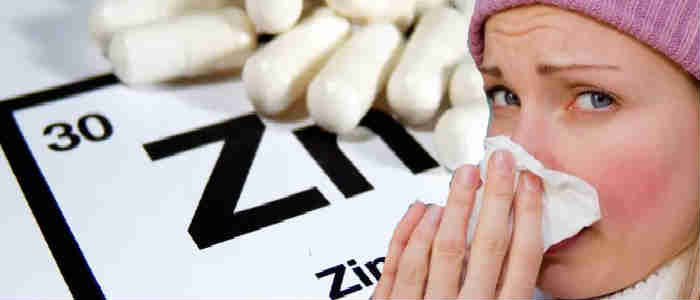 The common cold is a top reason for missed work and school days. Most of us have two or three colds per year, each lasting at least a week.
Vitamin C might not do anything to prevent or treat the common cold, but the other widely-used cold supplement, zinc, may actually by worth taking. A mineral that's involved in many different aspects of your cellular metabolism, zinc appears to interfere with the replication of rhinoviruses, the microbes that cause the common cold. 1
The common cold is a top reason for missed work and school days. Most of us have two or three colds per year, each lasting at least a week.
Vitamin C might not do anything to prevent or treat the common cold, but the other widely-used cold supplement, zinc, may actually by worth taking. A mineral that's involved in many different aspects of your cellular metabolism, zinc appears to interfere with the replication of rhinoviruses, the microbes that cause the common cold. 1Studies from the last several years show that some supplements containing zinc can help shorten the duration of cold symptoms by up to 40% depending on the amount of the mineral in each dose and what it's combined with.2 This has been borne out in a number of times. A 2011 review that considered 13 therapeutic studies—in which patients who'd just come down with the common cold were given zinc supplements, and compared to those who'd been given a placebo—found that the mineral significantly reduced the duration of the cold and also made symptoms less severe. 1 In 2017 a team of researchers performed a meta analysis on three small randomized trials. Combined, the analysis examined 102 participants taking zinc and 97 taking a placebo. Results suggest that zinc may be even more beneficil than researchers previously estimated. By day 5, 70% of people taking zinc lozenges had recovered from the common cold compared to only 27% of people taking the placebo. 3 The authors concluded that zinc lozenges may triple the recovery rate for people suffering from the common cold. The best part is that daily supplementation isn't necessary,. When you feel a cold coming on, start popping zinc lozenges. That will do much more for you than vitamin C or Echinacea. 4 In another study the mean common cold duration was 33% shorter for the zinc groups of the seven included trials. In five trials that used zinc doses of 80-92 mg/day, common cold duration was reduced by 33% and two trials that used zinc doses of 192-207 mg/day found an effect of 35%. The difference between the high dose and low dose zinc trials was not significant- so there is no evidence that zinc doses over 100 mg/day might lead to greater efficacy for treating colds. 5
Also, researcher Harri Hermila cautions that it's quite difficult to instruct patients. That's because zinc cold formulations sold at drugstores often contain multiple ingredients that can undercut zinc's effectiveness. For instance, the lozenges should not contain citric acid., Hermila says. This is because it binds with the zinc in a way that keeps the mineral from being released. In addition he says, the mechanism of action is not well understood, so scientists can't say exactly how it works. So, do check each package's list of ingredients and the size of the zinc dose, the scientists recommend. Because not all products are going to help.
References
- Joseph Stromberg, “Five vitamins and supplements that might actually be worth taking,” smithsonianmag.com, February 14, 2014
- Allison Aubrey, “Taking zinc can shorten your cold. Thank a 91 year old scientist for the discovery,” National Public Radio, February10, 2020
- Alex Berezow, “Zinc lozenges may triple recovery rate from colds,” acsh.org, October 13, 2017
- Harri Hemilä, et al., "Zinc Acetate Lozenges May Improve the Recovery Rate of Common Cold Patients: An Individual Patient Data Meta-Analysis." Open Forum Infectious Diseases 4 (2). Spring 2017
- Harri Hemila, “Zinc lozenges and the common cold: a meta-analysis comparing zinc acetate and zinc gluconate, and the role of zinc dosage,” JRSM Open, 2017 May 2;8(5)
View Comments
John William Dini, know to all as ‘Jack’, passed away at the age of 89 on June 17, 2026. He was born in Cleveland, Ohio on Nov. 14, 1936.
He published two books, a technical book on materials science and coatings and another on environmental issues. In retirement, he wrote extensively on various environmental issues for online publications.
He was a skilled leaded glass hobbyist, creating more than 20 lamps and many panels. He was a jogger for many years, competing in over 300 long distance races. He was a slow runner, not wanting to take the glory away from others. His secret was to start slow and taper. He and Anne traveled extensively, visiting over 70 countries.
He is survived by his wife, Anne, of 67 years, and sons Mike, Steve, and Paul. If you were to meet him somewhere, he would sum up his life as ‘peaches and cream’.