

By Dr. Ileana Johnson Paugh ——Bio and Archives--September 4, 2019
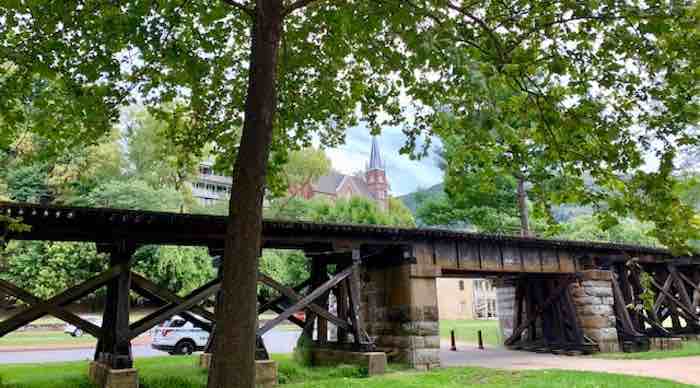 Harpers Ferry, West Virginia, once a bustling government factory town with over 3,000 inhabitants in its heyday, is nestled in Jefferson County, at the confluence of the Shenandoah and the Potomac Rivers. It exists today because the U.S. Armory (located here by George Washington) manufactured small arms here for sixty years, muskets, rifles, and pistols (more than 600,000) from 1801 until the opening days of the Civil War in 1861. With less than 300 inhabitants today, Harpers Ferry was the location of the incipient U.S. military industrial complex. The factory’s 400 workers produced more than 10,000 weapons a year.
Harpers Ferry was settled in a valley rich in natural resources: deposits of iron ore, limestone, timber from hardwood forests, and abundant water which attracted many industries. The town is famous for its picturesque streets, beautiful vistas, a railroad, two rivers, shale rocks, sandstone, and most significantly, for its contribution to the history of the United States.
Harpers Ferry, West Virginia, once a bustling government factory town with over 3,000 inhabitants in its heyday, is nestled in Jefferson County, at the confluence of the Shenandoah and the Potomac Rivers. It exists today because the U.S. Armory (located here by George Washington) manufactured small arms here for sixty years, muskets, rifles, and pistols (more than 600,000) from 1801 until the opening days of the Civil War in 1861. With less than 300 inhabitants today, Harpers Ferry was the location of the incipient U.S. military industrial complex. The factory’s 400 workers produced more than 10,000 weapons a year.
Harpers Ferry was settled in a valley rich in natural resources: deposits of iron ore, limestone, timber from hardwood forests, and abundant water which attracted many industries. The town is famous for its picturesque streets, beautiful vistas, a railroad, two rivers, shale rocks, sandstone, and most significantly, for its contribution to the history of the United States.
 Famous and ordinary men and women contributed to Harpers Ferry’s heritage: George Washington, Thomas Jefferson, Meriwether Lewis, John Brown, Frederick Douglass, Native Americans, pioneers trekking west, canal builders, railroaders, armory craftsmen, immigrants, slaves, freedmen, and the townspeople of Harpers Ferry.
Thomas Jefferson described in 1783 the passage of the Potomac River through the Blue Ridge as “one of the most stupendous scenes in nature.” Many hikers have followed the trails and climbed the Jefferson Rock to experience the romance described by Jefferson.
Meriwether Lewis came to Harpers Ferry Armory in March 1803 to supply his now famous Lewis and Clark expedition. Secretary of War Henry Dearborn sent orders to the Armory Superintendent Perkins in Harpers Ferry to help Captain Lewis and advised him to furnish the expedition with weapons, spare parts, and tools.
Meriwether Lewis was President Jefferson’s private secretary and he shared his thirst for adventure and knowledge. President Jefferson had instructed Lewis, “The object of your mission is to explore the Missouri river, & such principal stream of it, as, by its course and communication with the waters of the Pacific Ocean, whether the Columbia, Oregon, Colorado or any other river may offer the most direct & practicable water communication across this continent for the purposes of commerce.”
Famous and ordinary men and women contributed to Harpers Ferry’s heritage: George Washington, Thomas Jefferson, Meriwether Lewis, John Brown, Frederick Douglass, Native Americans, pioneers trekking west, canal builders, railroaders, armory craftsmen, immigrants, slaves, freedmen, and the townspeople of Harpers Ferry.
Thomas Jefferson described in 1783 the passage of the Potomac River through the Blue Ridge as “one of the most stupendous scenes in nature.” Many hikers have followed the trails and climbed the Jefferson Rock to experience the romance described by Jefferson.
Meriwether Lewis came to Harpers Ferry Armory in March 1803 to supply his now famous Lewis and Clark expedition. Secretary of War Henry Dearborn sent orders to the Armory Superintendent Perkins in Harpers Ferry to help Captain Lewis and advised him to furnish the expedition with weapons, spare parts, and tools.
Meriwether Lewis was President Jefferson’s private secretary and he shared his thirst for adventure and knowledge. President Jefferson had instructed Lewis, “The object of your mission is to explore the Missouri river, & such principal stream of it, as, by its course and communication with the waters of the Pacific Ocean, whether the Columbia, Oregon, Colorado or any other river may offer the most direct & practicable water communication across this continent for the purposes of commerce.”
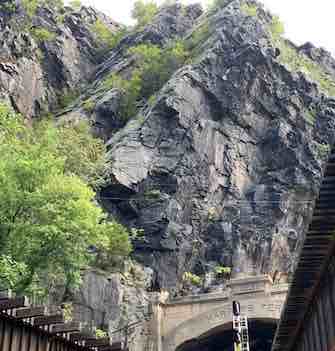
 The opening in the Blue Ridge Mountains created by water millions of years ago provided passage on foot, by canoe, by ferries, by canals, and by railroads. The C&O Canal and B&O Railroad provided transportation along the river corridor. The Baltimore and Ohio Railroad (B&O), the first major line in America, still runs through Harpers Ferry. Tourists today see the bridge ruins jutting out of shallow water and canal remnants as transportation had moved on to railroads and highways.
According to museum archives, “the confluence of the Potomac and Shenandoah rivers was first crossed by a ferry in 1733. Fourteen years later the ferry rights were purchased by Robert Harper and the town became known as ‘Shenandoah Falls at Mr. Harper’s Ferry.’” Robert Harper began the first ferry across the Potomac River in 1747 and it operated until 1824.
The mountainous terrain and forested landscape became the stage for the Civil War in 1861 and it wedged the town between North and South. According to museum archives, Harpers Ferry was captured and recaptured five times in one day, September 15, 1862. “Gen. Thomas J. ‘Stonewall’ Jackson forced the war’s largest surrender of U.S. troops at Bolivar Heights, Schoolhouse Ridge, and the Murphy-Chambers Farm.”
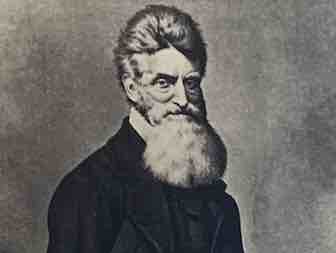
When fighting started in 1861, attributed in part by some to John Brown’s raid, the retreating U.S. troops burned both federal arsenal buildings to the ground to prevent the weapons from being taken by Confederate soldiers.
The two rivers, the Potomac and Shenandoah, flooded from time and time and the high-water marks were recorded by the hardware store. Then there were times when the water level was too low, and business came to a standstill. The C&O Canal was forever closed in 1924. The bridges were closed after they were swept away during the 1936 flood and not reopened until the late 1940s.
The opening in the Blue Ridge Mountains created by water millions of years ago provided passage on foot, by canoe, by ferries, by canals, and by railroads. The C&O Canal and B&O Railroad provided transportation along the river corridor. The Baltimore and Ohio Railroad (B&O), the first major line in America, still runs through Harpers Ferry. Tourists today see the bridge ruins jutting out of shallow water and canal remnants as transportation had moved on to railroads and highways.
According to museum archives, “the confluence of the Potomac and Shenandoah rivers was first crossed by a ferry in 1733. Fourteen years later the ferry rights were purchased by Robert Harper and the town became known as ‘Shenandoah Falls at Mr. Harper’s Ferry.’” Robert Harper began the first ferry across the Potomac River in 1747 and it operated until 1824.
The mountainous terrain and forested landscape became the stage for the Civil War in 1861 and it wedged the town between North and South. According to museum archives, Harpers Ferry was captured and recaptured five times in one day, September 15, 1862. “Gen. Thomas J. ‘Stonewall’ Jackson forced the war’s largest surrender of U.S. troops at Bolivar Heights, Schoolhouse Ridge, and the Murphy-Chambers Farm.”
When fighting started in 1861, attributed in part by some to John Brown’s raid, the retreating U.S. troops burned both federal arsenal buildings to the ground to prevent the weapons from being taken by Confederate soldiers.
The two rivers, the Potomac and Shenandoah, flooded from time and time and the high-water marks were recorded by the hardware store. Then there were times when the water level was too low, and business came to a standstill. The C&O Canal was forever closed in 1924. The bridges were closed after they were swept away during the 1936 flood and not reopened until the late 1940s.
 The factory town suffered after the destruction of the Armory in 1861, four years of Civil War, transportation changes, and numerous floods followed by periods when the water table was too low. A brewery was built here in 1895 but the 1914 prohibition forced owners to convert it into a bottling factory for sodas and spring water but then a flood destroyed it completely.
Baptist missionaries founded Storer College after the Civil War. John Storer donated $10,000. Storer College acquired buildings that were originally armory supervisors’ housing and graduated its first class in 1872 and “made significant contributions to progress for black Americans. It drew prominent men to its campus, including Frederick Douglass and W. E. B. Du Bois, the founder of NAACP.
Dr. Henry T. McDonald, Storer College President, said in 1938, “People from the far corners of the earth will come here to a spot of supreme interest to students of history, students of scenic beauty, and students of nature’s surprising riches.” The school closed in 1955 due to “desegregation, loss of state funding, and dwindling enrollment.”
Harpers Ferry provided protection to “escaped slaves” during the Civil War. There are photographs dated 1862, showing the tent encampment at the musket factory yard. Union forces afforded freedmen some protection. “By 1865 there were about thirty thousand freedmen in the Shenandoah Valley.”
Harpers Ferry is connected to the neighboring states through three trails, The Appalachian Trail, 2176 miles long, Chesapeake and Ohio Canal (C&O Canal Towpath) along the Potomac River from Washington, D.C. to Cumberland, Maryland, and Potomac Heritage Trail, which extends from Pennsylvania to the Chesapeake in Virginia.
If I could hike through the beautiful forests and rocky terrain from Harpers Ferry, 70 miles more or less, the Potomac Heritage Trail would take me home.
The factory town suffered after the destruction of the Armory in 1861, four years of Civil War, transportation changes, and numerous floods followed by periods when the water table was too low. A brewery was built here in 1895 but the 1914 prohibition forced owners to convert it into a bottling factory for sodas and spring water but then a flood destroyed it completely.
Baptist missionaries founded Storer College after the Civil War. John Storer donated $10,000. Storer College acquired buildings that were originally armory supervisors’ housing and graduated its first class in 1872 and “made significant contributions to progress for black Americans. It drew prominent men to its campus, including Frederick Douglass and W. E. B. Du Bois, the founder of NAACP.
Dr. Henry T. McDonald, Storer College President, said in 1938, “People from the far corners of the earth will come here to a spot of supreme interest to students of history, students of scenic beauty, and students of nature’s surprising riches.” The school closed in 1955 due to “desegregation, loss of state funding, and dwindling enrollment.”
Harpers Ferry provided protection to “escaped slaves” during the Civil War. There are photographs dated 1862, showing the tent encampment at the musket factory yard. Union forces afforded freedmen some protection. “By 1865 there were about thirty thousand freedmen in the Shenandoah Valley.”
Harpers Ferry is connected to the neighboring states through three trails, The Appalachian Trail, 2176 miles long, Chesapeake and Ohio Canal (C&O Canal Towpath) along the Potomac River from Washington, D.C. to Cumberland, Maryland, and Potomac Heritage Trail, which extends from Pennsylvania to the Chesapeake in Virginia.
If I could hike through the beautiful forests and rocky terrain from Harpers Ferry, 70 miles more or less, the Potomac Heritage Trail would take me home.View Comments
Dr. Ileana Johnson Paugh, Ileana Writes is a freelance writer, author, radio commentator, and speaker. Her books, “Echoes of Communism”, “Liberty on Life Support” and “U.N. Agenda 21: Environmental Piracy,” “Communism 2.0: 25 Years Later” are available at Amazon in paperback and Kindle.